
Investigations
If Investigations were an image, it would be an X-ray. That is its core: the mechanisms, the construction processes, the mental paths that precede/coincide with the image—and that can either short-circuit thinking or extend aesthetic experience. We learn from artists who work with the image as their medium: from their practices, their methodologies, their structures and vocabulary, from the patterns of thought they use and invent.
We are interested in transforming these tools into experimental projects both within and beyond the field of art, as well as into formats that can work for a wider audience. For us, investigating visual ways of thinking is not a specialized approach to the image, but a constitutive element of understanding and designing in an increasingly flat world.
Investigations: Image/Method
What kinds of thinking become visible when artists whose work engages process turn toward a single image through the same set of questions?
Image/Method offers a glimpse into the atelier of the mind. Participating practitioners reflect on a chosen work through a shared set of questions—the same questions, posed to each artist. This consistency is the point: it allows something to surface that individual artist statements rarely reveal.
Not a collection of reflections, but recurring imagistic moves. Operations in the making or transformation of images through which artists reorganise perception, translate phenomena, or open new directions for thought. These moves are editorial readings proposed by PHLSPH-Lab as entry points into the works discussed.
By tracing these movements across different practices, convergences appear. Distinct methodological trajectories become visible. The project maps a terrain where thinking and making are inseparable.
Image/Method has been developed in collaboration with Assistant Professor Efi Kyprianidou, Department of Fine Arts, Cyprus University of Technology (CUT).
-
1. Could you briefly describe the conceptual process you follow in your work?
It really depends on the project or the idea. I try to pay more attention to the process of thinking about the image more than the image itself. I guess it's because I’m interested in what is “behind” the image rather than the surface of it. For me, the image is like a fragile container—it holds not just a visual representation, but layers of history, emotion, and meaning. My process often involves intentional distortion, glitch, and fragmentation as ways to reveal what lies beneath: the decisions, the failures, the reinterpretations.
2. Is there a dynamic movement/shape/pattern or even rhythm that you are more drawn to in your visual thinking while working?
I think I’m attracted to the “break”. Kind of the moment where an image fractures, or it fails. Then it becomes something that Its not linear; it’s layered, fragmented, and accumulative. I see it as a way to add layers on top of each other and thus, creating new movement. Each layer, each error, each intervention creates a new rhythm, in a way like memory: never static, always rewriting.
3. Has the image(s) you have chosen here to share shifted your understanding or tapped into an area that was unknown to you? And if so, could you loosely link an idea with an imagistic aspect?
I’m choosing to share images from the series “Palimpsesto.” After much thinking about the project, I realized that for me, this is the most documentary project I could think of, but not in the traditional sense. I’ve come to understand it as a kind of radical documentalism, where the surface of the image does not tell something about the fact, the place, the person. Instead, I focus on the process; the distortion, the code manipulation, the visible marks of construction—revealing the symbolic and emotional weight behind it. In this way, the image doesn’t just present a finished narrative. It becomes an open process.
The project is really about making the process of creating an image visible; the process becomes the work itself, rather than the final image. Gestures are the main thing: the acts of intervention, the decisions, the playful pushing and rethinking of the photograph again and again. Through this, I became interested in how much you can tell about a specific place without actually showing it. By exposing this fragility and manipulation, I realized I wasn’t moving away from documentary—I was getting closer to how memory actually works. I like to think of Images not as a mirror of reality, but a site of constant rewriting.
-
1. Could you briefly describe the conceptual process you follow in your work?
The conceptual process of a given work depends largely on the medium I am using. Like most work, the conceptual process begins in the process of designing, researching, or attempting to think through a specific problem or issue. More than anything, in the beginning I am focused on splicing and overlaying different ideas and sensations. The express purpose is to generate and evaluate whether the accumulated material and prospective techniques can be used towards the execution of the work. This means that I try to brainstorm the context or self-imposed restrictions in order to create a framework which will guide the subsequent development of the work. Often this means that the conceptual process is one of rejecting and erasing previously accumulated work. In the visual work I have been doing in this vein seeks to explore the concept of blurred/blurry vision and the strategies employed to manage this sensory experience.
2. Is there a dynamic movement/shape/pattern or even rhythm that you are more drawn to in your visual thinking while working?
In my work, images are cut, spliced and manipulated in more ways than one. I borrow techniques from the Concrete Poetry movement and reuse them in a way which explores where and how language as a visual object might be folded into image. Repetition is key to my visual work and this is evident in how the work and its components are repeated across the image itself.
3. Has the image(s) you have chosen here to share shifted your understanding or tapped into an area that was unknown to you? And if so, could you loosely link an idea with an imagistic aspect?
This particular image has allowed me to rethink the geometry used in portrait photography and how verisimilitude is essentially a construct. In this sense, I came to think how representation as practice can be amplified to the point that it bleeds into hard-edged abstraction.
-
1. Could you briefly describe the conceptual process you follow in your work?
This image is from a series called Psychic Telephone, a collaboration with author Marin Sardy, where she interviewed seven people who believe they have psychic abilities. I use her text as source material for prompts to feed into a text-to-image AI generator to make AI images that I then use as conceptual jumping-off points to make camel-born photographs. Conceptually, the work plays with what we can see and know about the universe, and creativity as a gesture to the divine.
2. Is there a dynamic movement/shape/pattern or even rhythm that you are more drawn to in your visual thinking while working?
Again, this depends; I am flexible about listening to what the project needs and being flexible about my own approach. I am fascinated by what’s not seen in the photographic image, so much of my work is about trying to reveal the unseen or invisible.
I do this so that translation and recursion work together, though. I’m taking one material, be it photographic images from archives or written text, then alchemizing it into something else. Then, revisiting the original state of the material or going through the process again, to see what comes out.
3. Has the image(s) you have chosen here to share shifted your understanding or tapped into an area that was unknown to you? And if so, could you loosely link an idea with an imagistic aspect?
Yes, not just this image specifically, but the series as a whole. I’m very controlling of my process normally, and the act of collaboration (both with my Marin, as well as with technology) cracked up something useful in my process, allowing me to be more open to seeing different ideas visually and conceptually.
Part of what I’ve learned about my own way of working, and also what I struggle with, is feeling that I have fully conceptualized and visualized the art I make before I make it. The pre-cognitive process is so strong (my mind’s eye), that I see what I need to make beforehand, so much so that sometimes I never get out of this cerebral state. Much of my working process now is not theorizing or pre-visualizing too much beforehand. Getting just enough research to begin in the studio. Then, being ok with letting go of what I thought the outcome should be. Making art, for me, is not a thesis defense (not at first, at least), so I have to be willing to let go of everything I thought was working as a way of allowing myself to explore the terrain. I kind of have to trick myself into the “play” or “experimentation” of the physical work, so that I can leave for the unexpected.
With respect to this image, which is titled, “The Ever Day Portal”, it’s conceptually about this very idea. Through play, experimentation, and getting loose in the process of making (i.e., not always having a strict plan), I create room for new visual strategies to emerge that I wouldn’t have discovered if I had pre-planned the image. I call this “going in blind”.
Fernando Marante, Variation 42, 2020, Photograph
Xenakis score
-
Meeting the World through the artist—entry points
1. Could you briefly describe the conceptual process you follow in your work?
Each project originates from a hypothesis that investigates how different materials respond visually when subjected to an intervention, most often involving movement. The process is inherently performative. The work seeks to examine mechanisms of transformation and to develop a vocabulary of differences and similarities emerging from these processes. Within this framework, the resulting images can be understood less as final outcomes and more as side effects of the investigative process.
2. Is there a dynamic movement/shape/pattern or even rhythm that you are more drawn to in your visual thinking while working? *
Abstraction plays a central role, stemming from a desire to organize the visual expressions of the process into fundamental elements, lines and points, that relate to one another not only spatially but also temporally. This approach is strongly informed by the language of musical composition. From a formal perspective, the intervals between these expressions of the process, understood as spaces of comparison, become more significant than the images themselves.
3. Has the image(s) you have chosen here to share shifted your understanding or tapped into an area that was unknown to you? And if so, could you loosely link an idea with an imagistic aspect?
My body of work pursues a demanding objective: to translate the manifestation of phenomena in the world into a visual language that is schematic in nature. To illustrate this approach, one might consider the electrocardiogram, which converts the rhythms of the heart into a form of text. The first image is my own and represents a tentative approximation of this aim; the second is drawn from one of the many sources that inspire the work.
-
Meeting the World through the artist—entry points
1. Could you briefly describe the conceptual process you follow in your work?
When I work, the essential thing is to let myself be guided by forms and the desires of forms. I don’t have a recurring form in mind, but rather sensations, impressions linked to the body—like the sensation of liquid, of flowing at this moment, of streaming.
2. Is there a dynamic movement/shape/pattern or even rhythm that you are more drawn to in your visual thinking while working?
I don’t have a recurring form in mind, but rather sensations, impressions linked to the body—like the sensation of liquid, of flowing, of streaming.
3. Has the image(s) you have chosen here to share shifted your understanding or tapped into an area that was unknown to you? And if so, could you loosely link an idea with an imagistic aspect?
The image I chose is the first in the series of ghost images, created in 2020—and it triggered a whole methodology. It was unprecedented in my work, in what it brings into play, in my eyes. There's the idea of levitation, of an absence of weight within it, of suspension—and therefore of “secret” (how does it hold?).
-
1. Could you briefly describe the conceptual process you follow in your work?
In Manual Labor, the process did not begin with a defined concept. I started from a technical and aesthetic curiosity: how machine vision would detect and translate gestures. I used ChatGPT to generate Python scripts and began testing gesture estimation on recorded hands at work.
Only after reviewing the outputs did the conceptual layer emerge. By reading the overlays and isolating gesture traces, the project shifted from experiment to inquiry—allowing the results to shape the questions rather than the other way around.
2. Is there a dynamic movement/shape/pattern or even rhythm that you are more drawn to in your visual thinking while working?
What interested me was the reduction of the body to detected motion. When the background was removed, gestures became detached from context—almost like residual marks.
There is a movement from presence to abstraction: the worker disappears, and only the machine-recognised trace remains. I was drawn to this transformation—to the rhythm of repeated gestures translated into synthetic lines.
3. Has the image(s) you have chosen here to share shifted your understanding or tapped into an area that was unknown to you? And if so, could you loosely link an idea with an imagistic aspect?
Yes. I realised that the detected hand is not an individual hand but an aggregation—a synthetic construction trained on millions of examples. The image revealed that machine vision does not simply “see” labor; it reconstructs it through learned patterns.
This shifted my understanding of automation. The gesture trace became a way to think about the hand as a form of automation itself—and about tools as further extensions of that automation.
-
Cristóbal Ascencio (Guadalajara, 1988) is a photographer and visual artist who is part of Mexico’s National System of Creators (SNCA). His work explores the relationship between images and memory. With studies in Audiovisual Media (CAAV Jalisco) and Contemporary Photography (EFTI Madrid), his practice goes beyond traditional photography into virtual reality, data manipulation, and photogrammetry.
He has exhibited individually at the Mexican Cultural Institute in Spain (2025) and Getxo Photo Festival (2022), and collectively at Foam Amsterdam, Athens Photography Festival, Casa del Lago UNAM, and Deutsche Börse Foundation. Selected for FOAM Talent 2024-25, he won the First Prize FotoCanal Photography Book of the Community of Madrid (2024) and published Las flores mueren dos veces with Editorial Dispara (2025). His work is present in collections such as Art Vontobel and Fundación ENAIRE, and has been featured in publications like FOAM Magazine, Exit, Aesthetica, and the British Journal of Photography. -
Theodoros Chiotis’ publications include Screen (Paper Tigers Books, 2017), limit.less: towards an assembly of the sick (Litmus, 2017), κράμα (ή, γλώσσα_μηχανή) ([φρμκ], 2025) and counterfactual (Steel Incisors, 2026). He is also the editor and translator of the anthology Futures: Poetry of the Greek Crisis (Penned in the Margins, 2015). His work has appeared in Litmus, Datableed, Tripwire, Poetry Wales, Shearsman, Adventures in Form, Austerity Measures, Tenebrae, Forward Book of Poetry 2017, aglimpseof, Visual Verse, lyrikline, Otoliths, amongst others. He has translated contemporary British and American poets into Greek and Aristophanes into English. He is a member of the editorial board of the Greek literary magazine [φρμκ]. His project Mutualised Archives, an ongoing performative interdisciplinary work, received the Dot Award by the Institute for the Future of Book and Bournemouth University; he has also been awarded a High Commendation from the Forward Prizes for Poetry in 2017.
-
Danielle Ezzo is an interdisciplinary artist-writer based in New York City.
Her practice often begins with photography as an entry point and leans into new approaches to image-making, the shortcomings of the medium, and the slippages between innovation and understanding. She blends contemporary technological artifacts with the handmade, historical, and the personal. Ezzo’s work engages processes of mediation and mistranslation, drawing out the human traces embedded within digital systems and material surfaces.
Her work has been published in the Boston Globe, The New York Times, The Tate, Lenscratch, Fisheye Magazine, and Feature Shoot and exhibited in numerous exhibitions and festivals, including the A.C. Institute, The Santa Barbara Museum of Art, The Far Eastern Museum of Art, and Currents New Media Festival. Her work is in the collections of The Watson Library at The Metropolitan Museum of Art, Decker Library at Maryland Institute College of Art, Olin Library at Cornell University, among others.
She’s lectured at conferences, companies, and universities as a visiting artist and speaker, including Princeton University, Griffin Museum, Maryland Institute College of Art, Carrot Creative, Eyebeam, and The International Center of Photography.
Bylines include Ocula, The British Journal of Photography, The New Inquiry, Magnum Photos, Dear Dave Magazine, Right Click Save, Fellowship Trust, and Obscura Journal. She is the author of If Not Here, The Where? published by Silent Face Projects in 2023.
Danielle graduated from Lesley University College of Art & Design in Boston in 2015 with an MFA in Photography and Integrated Media and is currently faculty at The International Center of Photography. -
Fernando Marante is a visual artist whose experimental practice examines the role of time in the formation of the photographic image. Through the use of custom-built devices, often powered by electric motors or his own body, he sets ordinary objects into motion, allowing duration, repetition, and mechanical gesture to shape the image-making process. His work occupies a space between photography, sculpture, and performance.
He is represented by Bigaignon and Sous les Étoiles. -
Sarah Ritter became an artist after studying philosophy with Jean-Luc Nancy and photography at the National School of Photography in Arles. Her artistic practice is process-oriented; for each project, she aims at developing the proper way of making and showing images according to each topic. This approach has led to projects that explore landscapes, memory, and narrative, often through extended research phases and residencies, including trips to Detroit, Shanghai, and Costa Rica. Her first monograph, La nuit craque sous nos doigts, was published with Loco editions in 2019. She also edited the book Wild Rumors, Moby-Dick, Detroit et autres récits in 2023 (Loco Editions), which was the outcome of an art research project based on Melville’s book, in collaboration with writers, artists, philosophers and sociologists. Her work is part of several public and private collections in Europe—including the MACVAL, the Bibliothèque Nationale de France, and multiple Fracs—and is regularly exhibited in France (solo and collective) and in other countries (collective shows in Finland, Germany, Slovakia, Mexico, Argentina). Ritter has received several major grants and prizes, including the 2023 Research Grant from the Bourgogne-Franche-Comté region, the 2022 Grant from the Fondation des Artistes, the 2021 Institut pour la Photographie des Hauts-de-France research program, the BNF’s “Radioscopie de la France” major commission, and the Schneider Foundation Contemporary Talent Prize. Her work has also been supported by the CNAP national commission and the Casa de Velázquez
-
Alexey Yurenev is an artist, visual researcher, and educator whose work explores the intersections of memory, technology, and production of knowledge. He is Adjunct Faculty in the visual arts MFA Program at Columbia University and a faculty member at the International Center of Photography (ICP).
His work has been exhibited internationally at venues including FOAM (Amsterdam), Hangar (Brussels), MOMus Modern/Costakis Collection (Thessaloniki), and Rencontres d’Arles. He is the author of the book Seeing Against Seeing (2025).
Yurenev’s projects have been featured in The New York Times, National Geographic, Literary Hub, and Topic. His work is held in collections such as Johns Hopkins University Special Collections, FOAM Museum, and the Anti-Krieg Museum. He has been recognized by Photographer of the Year International and received the Silurian Society Award for excellence in arts and culture journalism. He has also been nominated for an Emmy Award and the FOAM Paul Huf Award.
He is the co-founder of FOTODEMIC, an online platform for innovative visual strategies, and the founder and executive producer of Living Room, a monthly public program for ICP alumni.
Workshops
PHLSPH Lab workshops are structured inquiries into image-based thinking, each organised around a theme introduced by a thinker or researcher who opens a shared field of investigation.
The emphasis is on process rather than outcome. While artifacts may emerge, the focus remains on working through the image—tracing how ideas take form and how visual operations shape thought in real time.
Depending on the nature of the workshop, the movement may lean more toward theoretical reflection or toward artistic practice. In each case, the aim is to examine how images operate within thinking and extend its epistemological range.
Workshops take place in person, online, or in hybrid formats.
Workshops: Visual Story Telling
Participants:
Lorena Articardi, Michelle Marshall, Jagoda Lasota, Giuseppe Sannino, Maria Ahmed, Tina Masoumi, Sarah-Jane Field
Workshops: Framing Crisis
The notion of crisis permeates the contemporary reality through and through. Often, it appears as a catchword, suggesting that what we are confronted with is spectacular, shocking or alarming. For photography, crisis is not only a recurrent topic to be depicted; it also hits the idea of representation and the trust in the technical image. Both, reality itself and the forms and formats through which it is mediated are nowadays shaken by crisis in various ways. But what exactly do we mean when we speak of crisis?
The term crisis is rooted in the ancient Greek verb κρίνω (to decide, to separate, to judge, to fight), which has evolved into “critique” as subjective activity on the one hand, and “crisis” as its objective counterpart, on the other hand. The modern concept of crisis seizes a critical situation, in which “new ‘causes’ […] disturb the existing equilibrium” (Valéry). Constituted by a complex temporality of change, it pushes for the radical transformation of its very conditions. How can photography challenge pervasive clichéd representation of crisis in order to subvert gridlocked perceptions? How can it grasp the critical dimension of both, an actual crisis and the crisis of its images? Is it possible to generate a critical framing of crisis? These and other questions will be addressed during this workshop.
Participants:
Berglind Hreiðarsdóttir, Dominik Fleischmann, Jana Hartmann, Joel Orozco, Monika Orpik
-
Stefanie Baumann is currently the co-director of Doc’s Kingdom and was a researcher at CineLab/IFILNOVA (New University of Lisbon), where she coordinated the working group “Thinking Documentary Film”. She obtained her PhD in philosophy in 2013 with a doctoral thesis on Walid Raad’s artistic project The Atlas Group. She has taught Philosophy, Aesthetics and Contemporary Art Theory at University Paris VIII (Paris, 2007–2010), AshkalAlwan (Beirut, 2013), ALBA—the Lebanese Academy of Fine Arts / University of Balamand (Beirut, 2012–2015) and the Maumaus Independent Study Program (Lisbon, since 2016). From 2005 to 2010 she worked closely with the artist Esther Shalev-Gerz and collaborated with the video artists Marie Voignier and Mounira Al Solh on several projects.
Workshops: On the Scales of the Photographic
Commissioned workshop by the MA of the Royal Academy of Art, The Hague (KABK)
Diverse operations of scale shape the contemporary visual milieu and significantly impact our visual and intellectual practices. What this means and why it is important can be understood by looking at the contemporary situation of photography. To make, look at or use a photographic image today is to be confronted by unavoidable operations of scale that span geo-political, phenomenological, machinic and aesthetic realms.
Think, for instance, of the sheer scale of photography today and the tension it creates between, on the one hand, billions of banal images destined to remain effectively invisible and, on the other hand, the commercial and political interests governing the circulation of images and their openness to novel forms of surveillance.
As material objects, photographs have always taken on variously scaled phenomenological values (whether hand-held polaroids, large-scale art prints or building sized projections) and have done so while simultaneously de- and re-scaling the things they depict. Photographic images are made and reproduced using the calibrated processes of scaling embedded in different formats of camera and forms of software (controlling manipulation of aperture, focus, depth of field and tonal intensity for example). At a fundamental level, such scaling operations combine to afford photographs their representational effects (establishing tonal and colour relations on a flat surface to give the sense of a rounded and substantial world).
Even on the basis of this short list, it is obvious that different and interrelated operations of scale are integral to the photographic image, to its circulation in wider contexts and to what these processes tell us about the worlds we live in.
If the contemporary visual milieu is suffused with such scalar processes, we ask, might exploring this fact discursively, critically and theoretically help us in developing our engagements with the problems and possibilities of the visual image today?
— Andrew Fisher
This is a video created in less than a day by the participating artists of the MA of KABK. It presents the ‘creative reaction’ of every participant to the theory, discussions, open questions and various visual strategies which were offered during the seminar. The goal of the thematic seminar was to instigate critical thinking on the theme and then for the participating artists to contribute in any form they wanted—from notes to printed works to just a quote that might have inspired them. What was at stake was being engaged in the process and not the production of a final work; to make this more clear to the viewer the artists were asked to compliment their work/work-in-progress with a question, a quote or a title to show the link which inspired them.

Participants:
Aline Papenheim, Ana Francisco-Horsthuis, Anastasia Miseyko, Andong Zheng, Azin Nafar Haghighi, Fabio Meinardi, Gundega Strauberga, Hana Selena Sokolović, Lara Varat, Marna Slappendel, Niside Panebianco, Sarah-Rose Antoun
-
Dr. Andrew Fisher is Research Fellow in the Department of Photography at FAMU (the Photography Department of the Academy of Arts, Prague) and founding editor of the journal Philosophy of Photography (2010–present). Andrew’s recent research has centered on the significance of various discourses and phenomenon of scale for our understanding of photography. This has resulted in a series of publications including: “Living With the Excessive Scale of Contemporary Photography” (in Photography Off the Scale, (2021) Tomáš Dvořák & Jussi Parikka (eds.), Edinburgh University Press; “Der fotografische Maßstab”, (in Ästhetik der Skalierung, Sonderheft 18, Zeitschrift für Ästhetik und Allgemeine Kunstwissenschaft (2020), Carlos Spoerhase, Steffen Siegel & Nikolaus Wegmann (eds.), Hamburg, Felix Meiner Verlag); and “Three Scale Models for a Photographic World: Benjamin, constellation, image and scale”, in Philosophy of Photography, Vol. 11, No. 1&2, 2021.
To visit Philosophy of Photography press here.
And here is Andrew Fisher on YouTube.
Projects
Projects at PHLSPH Lab move across research, curatorial work, and experimental collaboration. Some are publicly supported; others emerge through independent initiative and dialogue.
This section traces ongoing and completed work while remaining open to what comes next. We are interested in proposals and partnerships that push formats, cross disciplines, and that push formats, cross disciplines, and turn shared curiosities into collaborative work.
Projects: Follow the Glitch
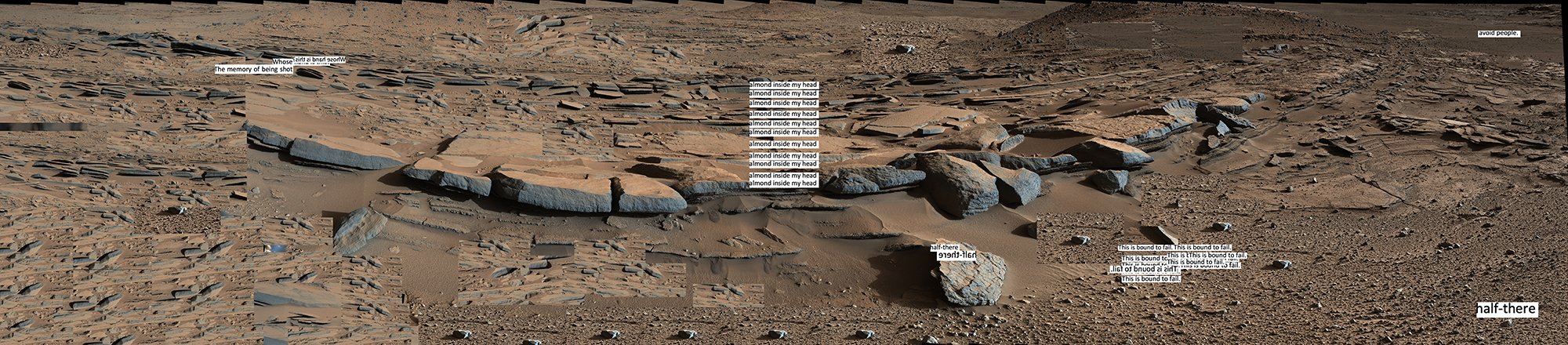
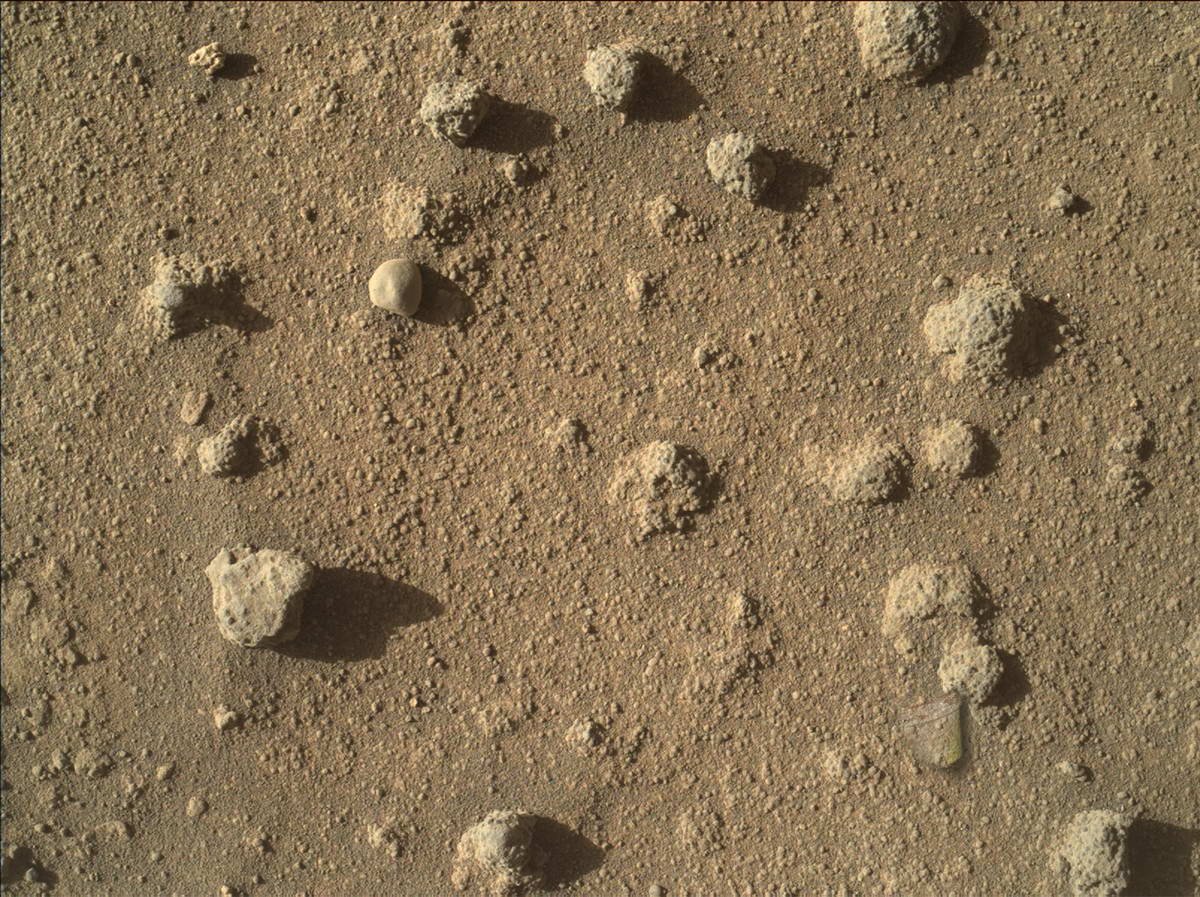
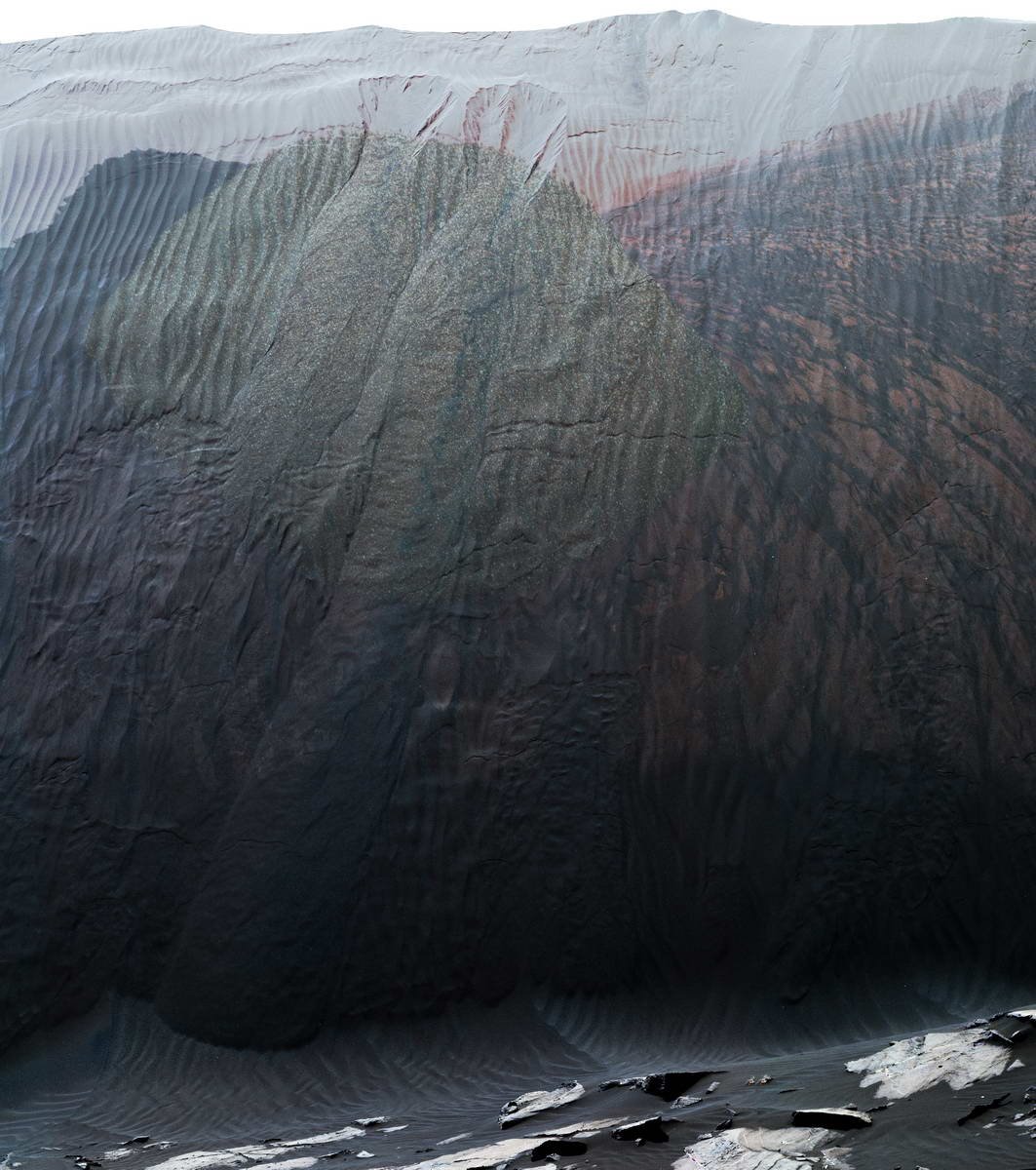
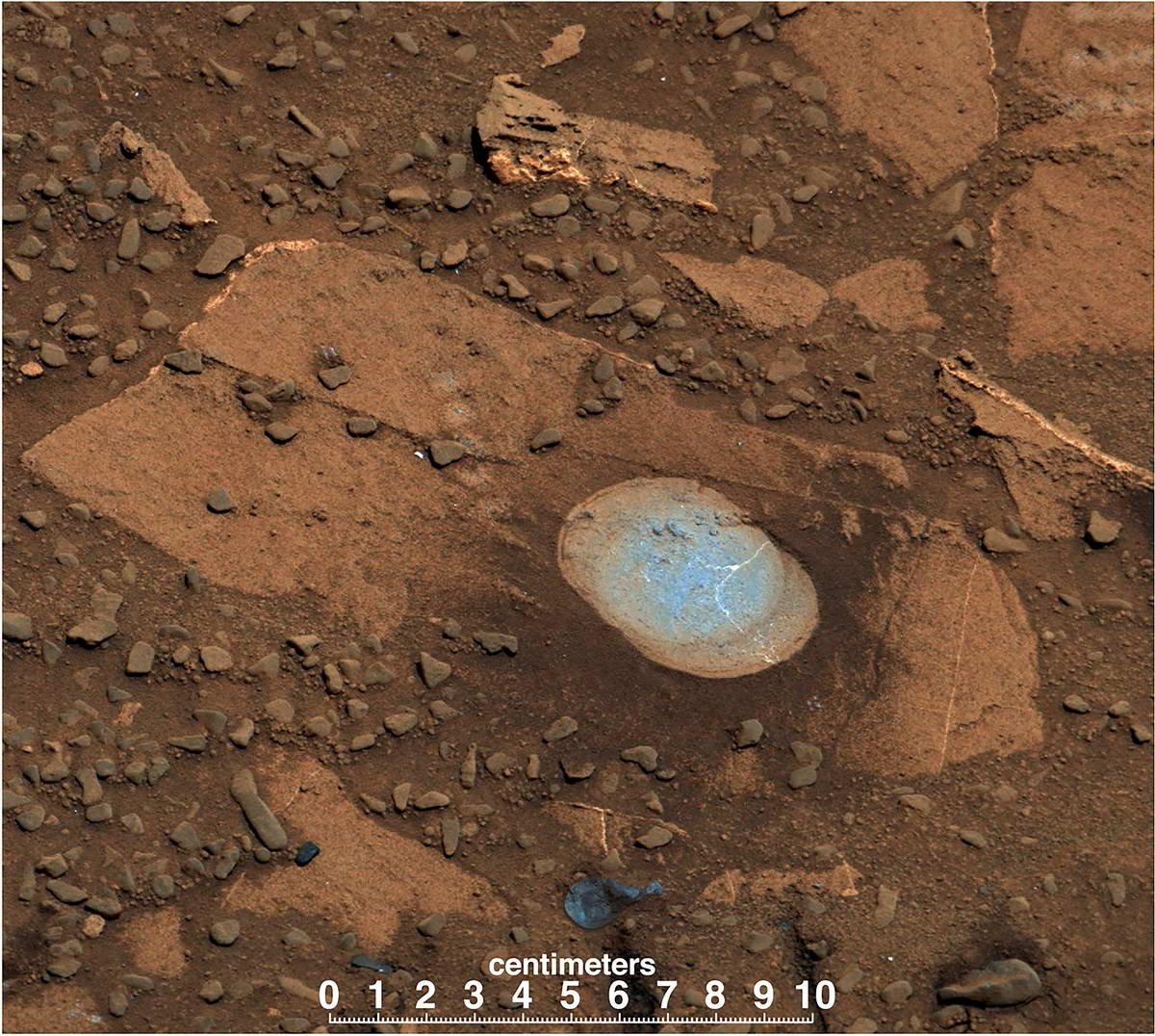
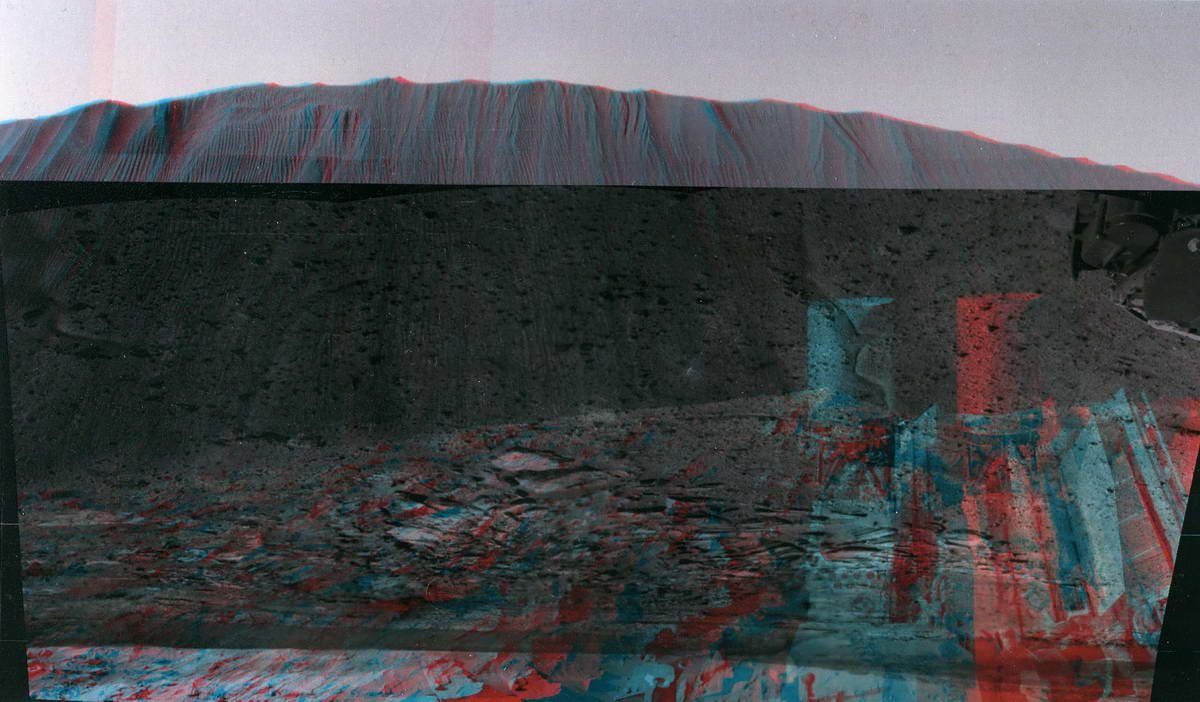
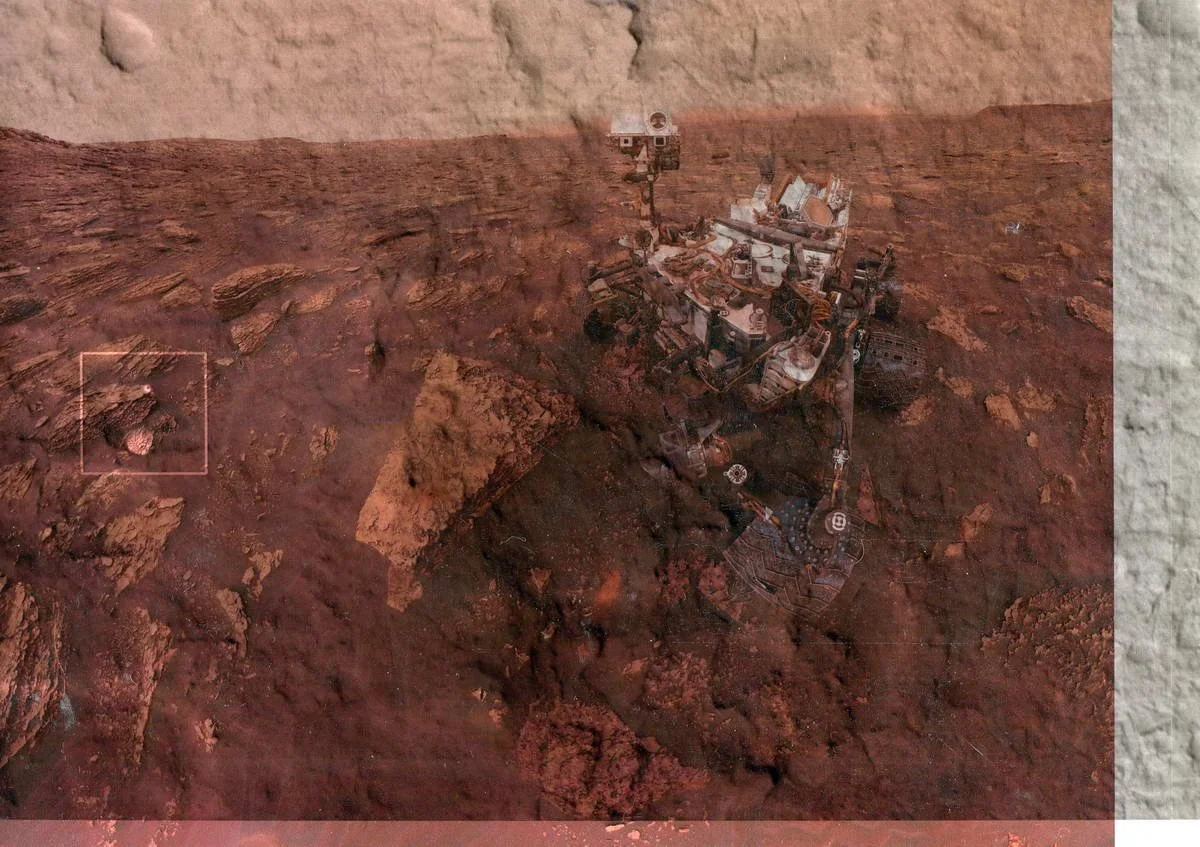
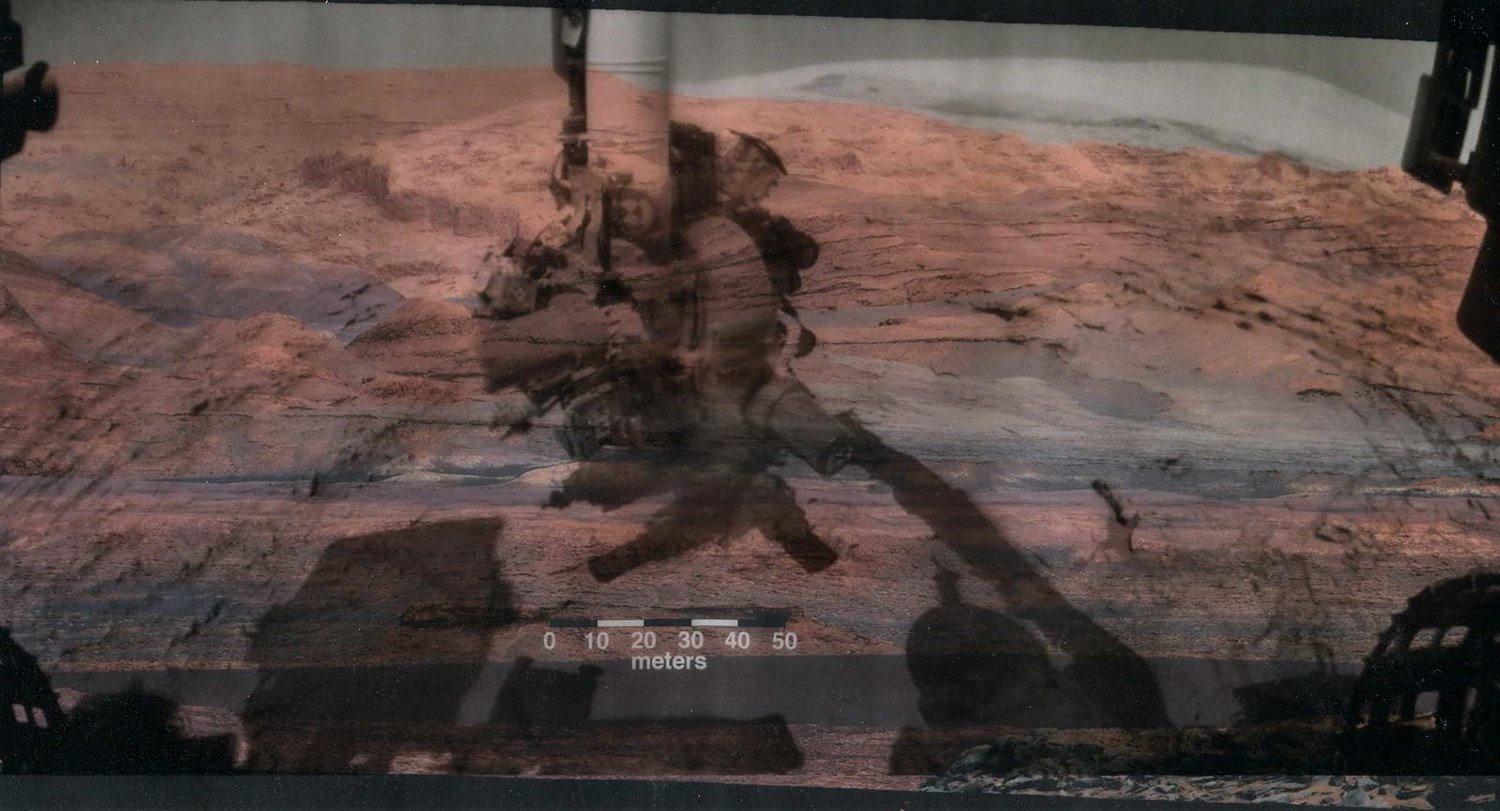
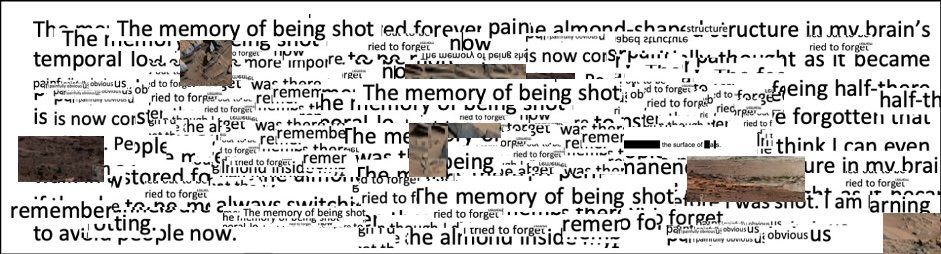
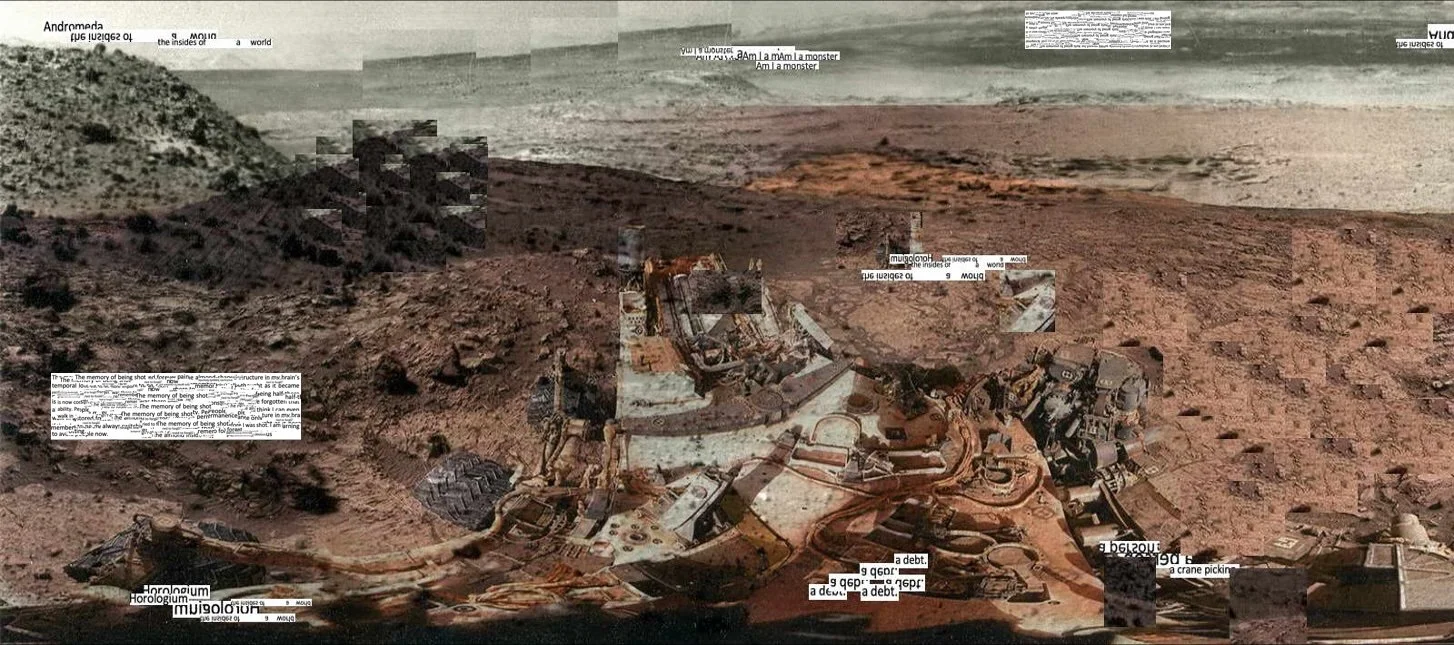
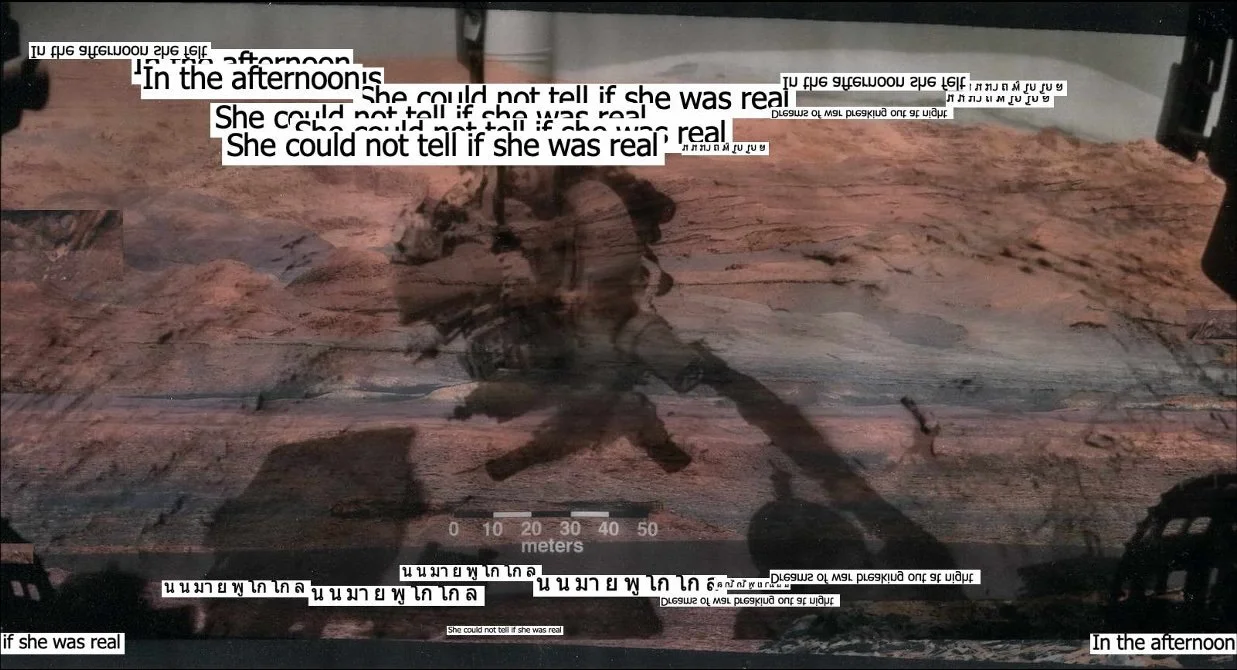
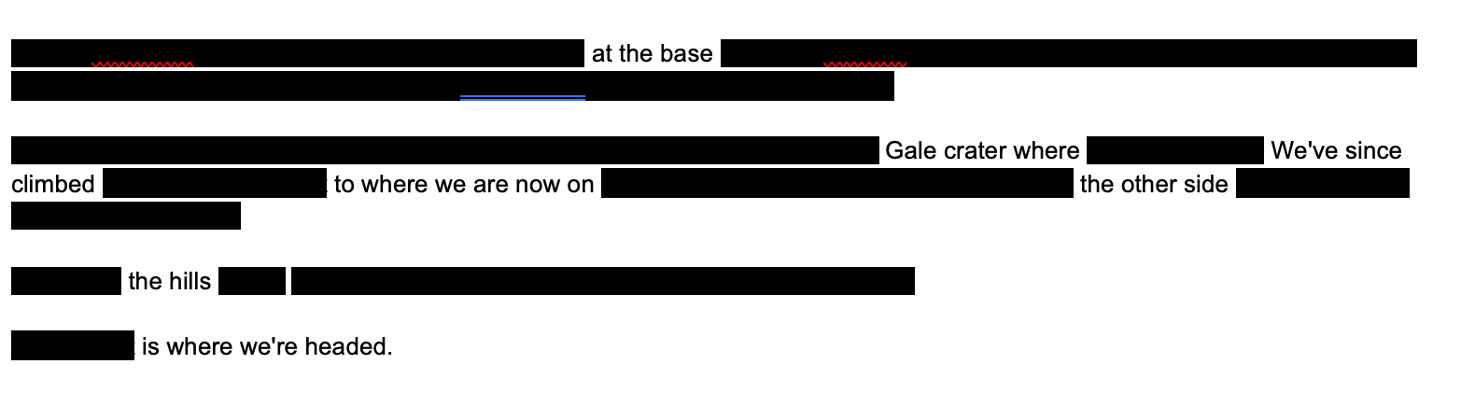
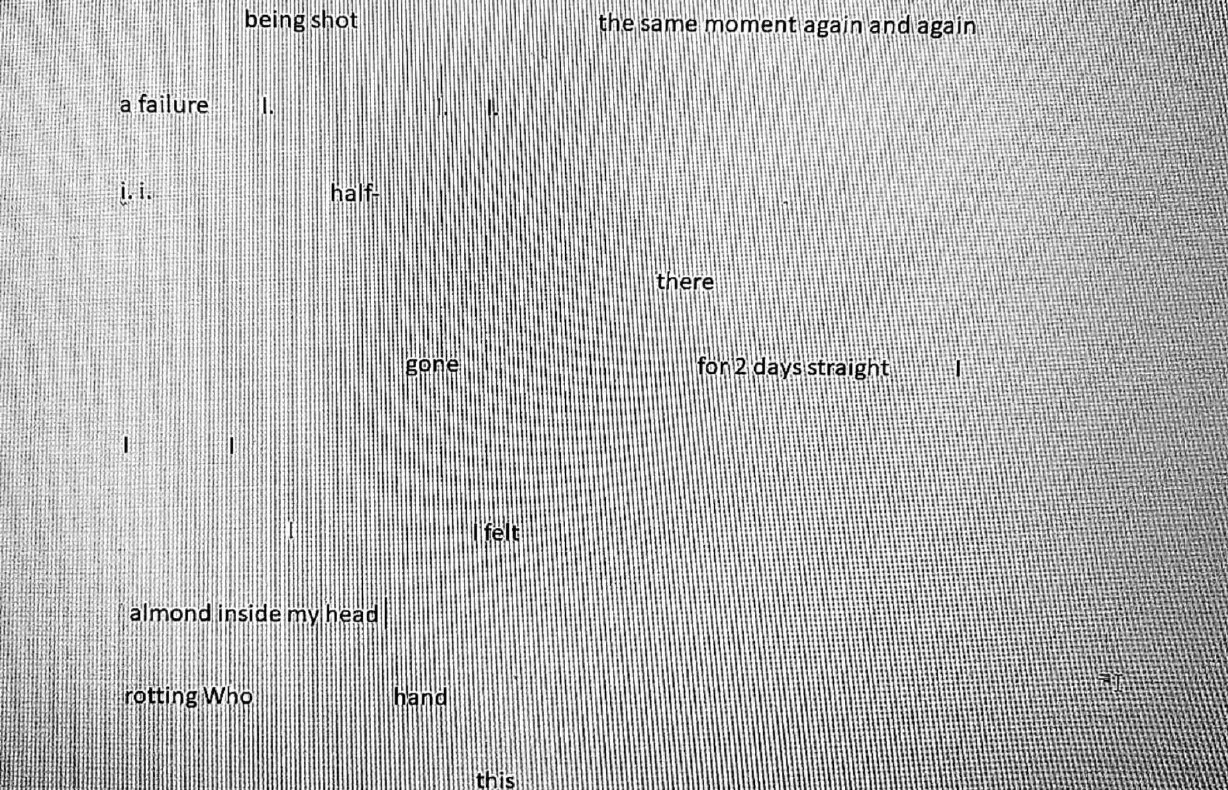
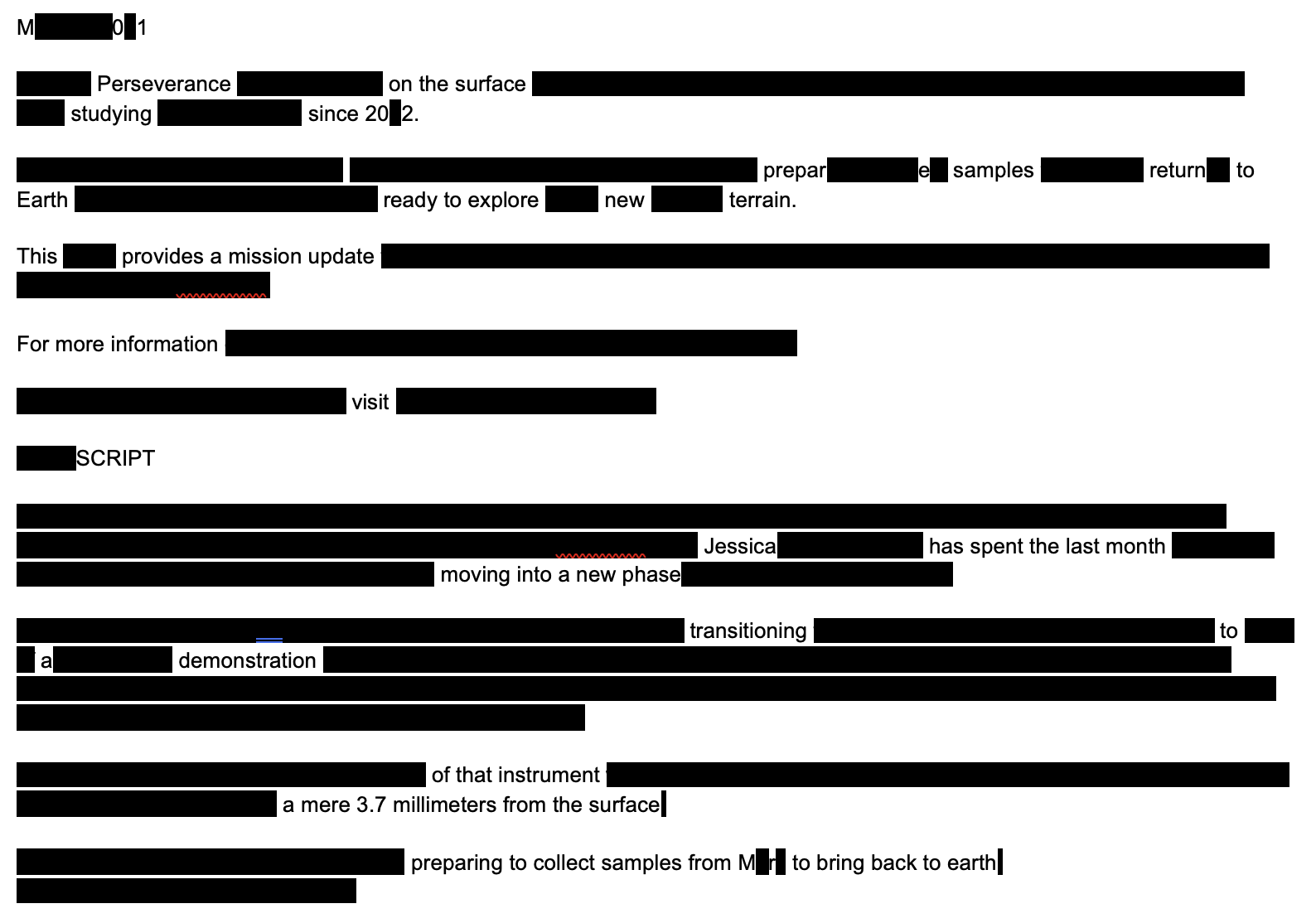
The research project Follow the Glitch concerns the investigation of the dynamic relationships that develop upon the appearance of a “micro-system failure” [glitch] and the fields of meaning that emerge through them. This investigation was conducted using as an archive a portion of the thousands of photographs that NASA makes publicly available on the internet, related to the missions to Mars. Most of the images, in order to be utilized, already contain within them some form of intervention. How could we know whether some of them have also undergone a glitch?
How predetermined is the reception/reading of either images or texts, and where do the limits of meaning lie?
Within this working framework, the artistic research and the dialogue that developed between visual artist Thodoris Zafeiropoulos and poet Thodoris Chiotis deviated from the usual way of viewing the glitch. In this body of work, one does not find images that formally classify at first glance as glitch art—that is, aestheticized images containing some kind of failure, as is common in the field of digital art.
The images presented, in combination with the textual works, invite the viewer into a participatory mode of viewing the work—to locate the fault, and then to follow it in order to trace the narrative that unfolds.
Το πρότζεκτ Follow the Glitch, αφορά στη διερεύνηση των δυναμικών σχέσεων που αναπτύσσονται στην εμφάνιση μιας «μικροβλάβης συστήματος» [glitch] και των νοηματικών πεδίων που προκύπτουν μέσα από αυτές. Η διερεύνηση αυτή έγινε χρησιμοποιώντας ως αρχείο ένα μέρος από τις χιλιάδες φωτογραφίες που η ΝASA δημοσιοποιεί στο διαδίκτυο και σχετίζονται με τις αποστολές στον Άρη. Οι περισσότερες εικόνες για να αξιοποιηθούν ενέχουν μέσα τους ενός είδους παρέμβαση. Άραγε πώς θα μπορούσαμε να γνωρίζουμε εάν κάποιες από αυτές έχουν υποστεί και glitch;
Πόσο προκαθορισμένη είναι η πρόσληψη/ανάγνωση είτε των εικόνων είτε των κείμενων και που βρίσκονται στα όρια του νοήματος;
Μέσα σε αυτό πλαίσιο εργασίας η καλλιτεχνική έρευνα και ο διάλογος που αναπτύχθηκε ανάμεσα στον εικαστικό Θοδωρή Ζαφειρόπουλο και στον ποιητή Θοδωρή Χιώτη, παρέκλινε από το συνηθισμένο τρόπο θέασης του glitch. Στο σώμα αυτών των έργων δεν εντοπίζονται εικόνες που φορμαλιστικά κατατάσσονται με την πρώτη ματιά στο glitch art, δηλαδή αισθητικοποιημένες εικόνες που εμπεριέχουν κάποια βλάβη, όπως συνηθίζεται στο πεδίο της ψηφιακής τέχνης [digital art].
Οι εικόνες που παρουσιάζονται σε συνδυασμό με τα κειμενικά έργα προσκαλούν τον θεατή σε ένα συμμετοχικό τρόπο θέασης του έργου—να εντοπίσει το σφάλμα, και έπειτα να το ακολουθήσει για να παρακολουθήσει το αφήγημα που δημιουργείται.

-
Theodoros Chiotis’ publications include Screen (Paper Tigers Books, 2017), limit.less: towards an assembly of the sick (Litmus, 2017), κράμα (ή, γλώσσα_μηχανή) ([φρμκ], 2025) and counterfactual (Steel Incisors, 2026). He is also the editor and translator of the anthology Futures: Poetry of the Greek Crisis (Penned in the Margins, 2015). His work has appeared in Litmus, Datableed, Tripwire, Poetry Wales, Shearsman, Adventures in Form, Austerity Measures, Tenebrae, Forward Book of Poetry 2017, aglimpseof, Visual Verse, lyrikline, Otoliths, amongst others. He has translated contemporary British and American poets into Greek and Aristophanes into English. He is a member of the editorial board of the Greek literary magazine [φρμκ]. His project Mutualised Archives, an ongoing performative interdisciplinary work, received the Dot Award by the Institute for the Future of Book and Bournemouth University; he has also been awarded a High Commendation from the Forward Prizes for Poetry in 2017.
-
Theodoros Zafeiropoulos was born in 1978. He graduated from the School of Fine Arts, Aristotle University of Thessaloniki (1998–2003). He participated in the Erasmus program in the University of Barcelona (2001). He graduated from the MFAof ASFA (2004–2006). He graduated and was honored with the Paula Rhodes Memorial Award from the MFA program of the School of Visual Arts, New York USA as recipient of the Fulbright, Gerondelis & Al.Onassis Foundations scholarships (2007–2009). He participated in the Skowhegan School of Painting and Sculpture (2009). In 2016 he concluded his PhD dissertation in the School of Architecture, University of Thessaly. Since 2001 he has presented 10 solo shows and has participated in more than 100 international group shows, residencies, and projects in Greece, USA, and elsewhere. He received commissions to create site-specific installations in many institutions and Foundations including the Morton Arboretumin Lisle Illinois, USA, the Museum of Civil Aviation in Athens, Miltech Hellas,Goethe Institute Thessaloniki, Museum of Photography in Thessaloniki and the G&A Mamidakis Foundation. His artworks are part of many public and private collections in Greece, Switzerland, London, USA, and elsewhere. In 2013 he was resident artist in the Flux Factory in NYC and the USF residency program in Bergen, Norway. In 2013 he was selected to represent Greece in the 16th Biennale of European and Mediterranean Young Artists entitled Errors Allowed, in Ancona, Italy. In 2014 he participated in the Photo Biennale of the Thessaloniki Museum of Photography. In 2017 his project HomeLandpresented as collateral event in the 18th Biennale of European and Mediterranean Young Artists entitled Home, Conflict, Dream, Failure in Tirana Albania. In 2017 he was elected as Assistant professor in NTUA, School of Architecture. He lives and works in Athens.
-
Dr Alexandra Athanasiadou works at the intersection of visual practice and philosophical inquiry. She is the founder of the PHLSPH Lab: Image Thinking Lab.
For fifteen years, she has worked with images—inside museums, galleries, and universities, but never quite contained by any of them. Her route through the photography world has taken her from the Museum of Photography in Thessaloniki to Candlestar in London, from European platforms like Transeurope PhotoProject to curating and setting up a photography award with IOM Central Asia, from a research program at the University of Crete to her current roles as a Special Scientist at the Technological University of Cyprus, an external tutor on the MA Photography and Society at the Royal Academy of the Arts in The Hague, and a teaching position at the School of Visual and Applied Arts, Aristotle University of Thessaloniki.
Along the way, she built something between the usual categories: a practice that draws on academic training (a PhD in Aesthetics; the Courtauld; Oxford; Panteion University) but refuses to stay in its lane. The work sits at the edges—close enough to both the art world and the academy to know their rules, far enough in to move freely between them.
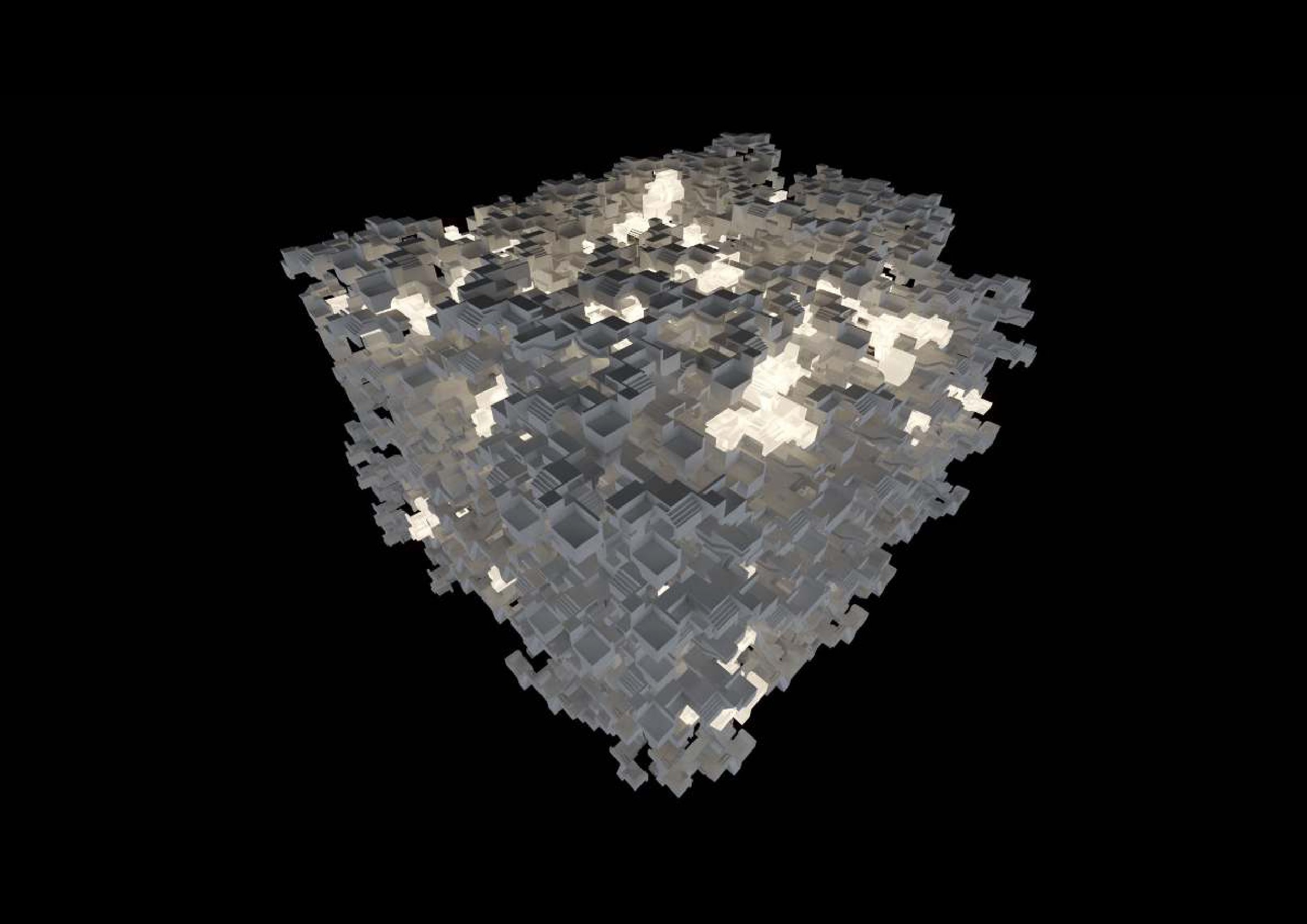
Projects: Πλέγμα,ο εγκέφαλος στ(η)ν πόλη
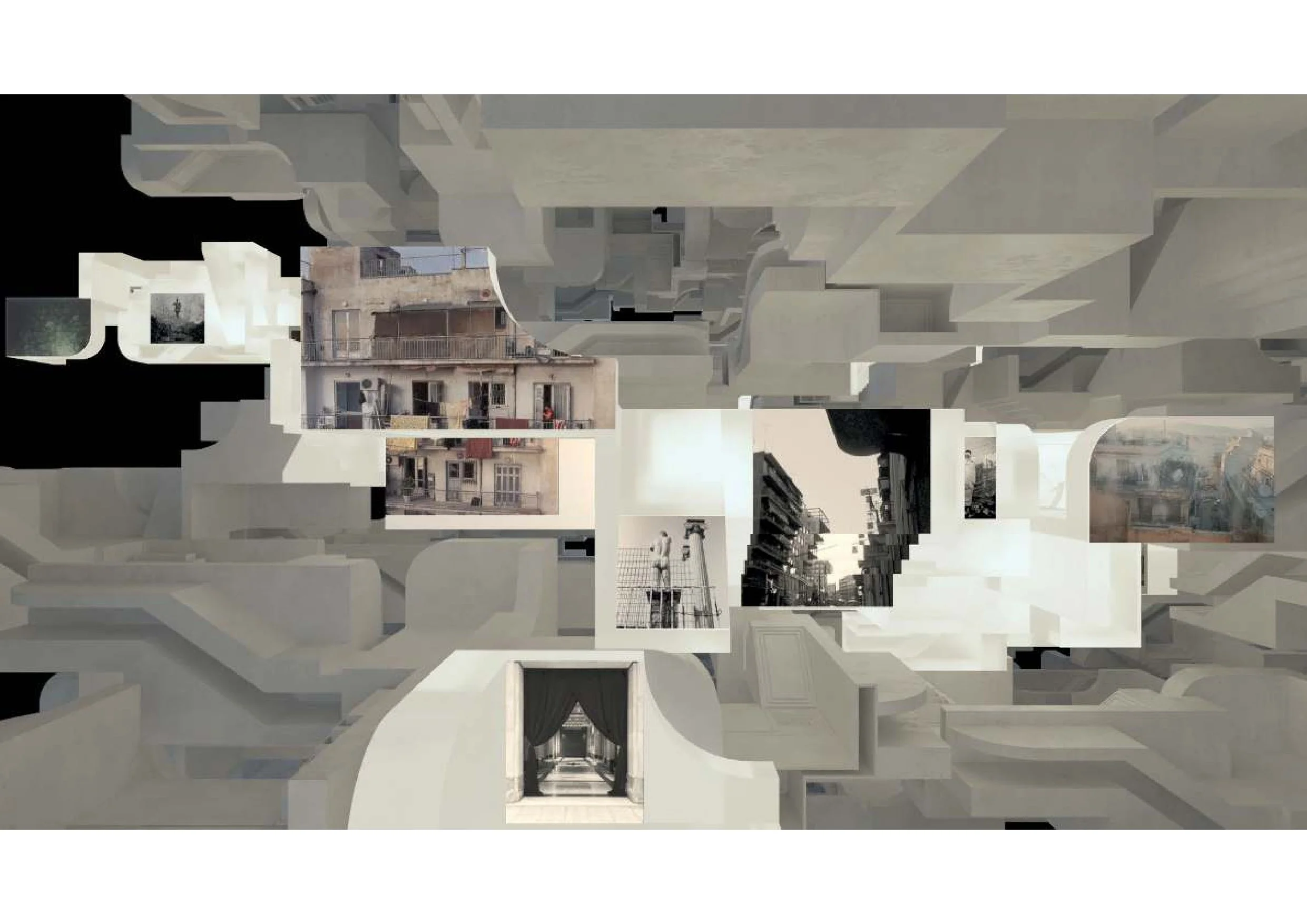
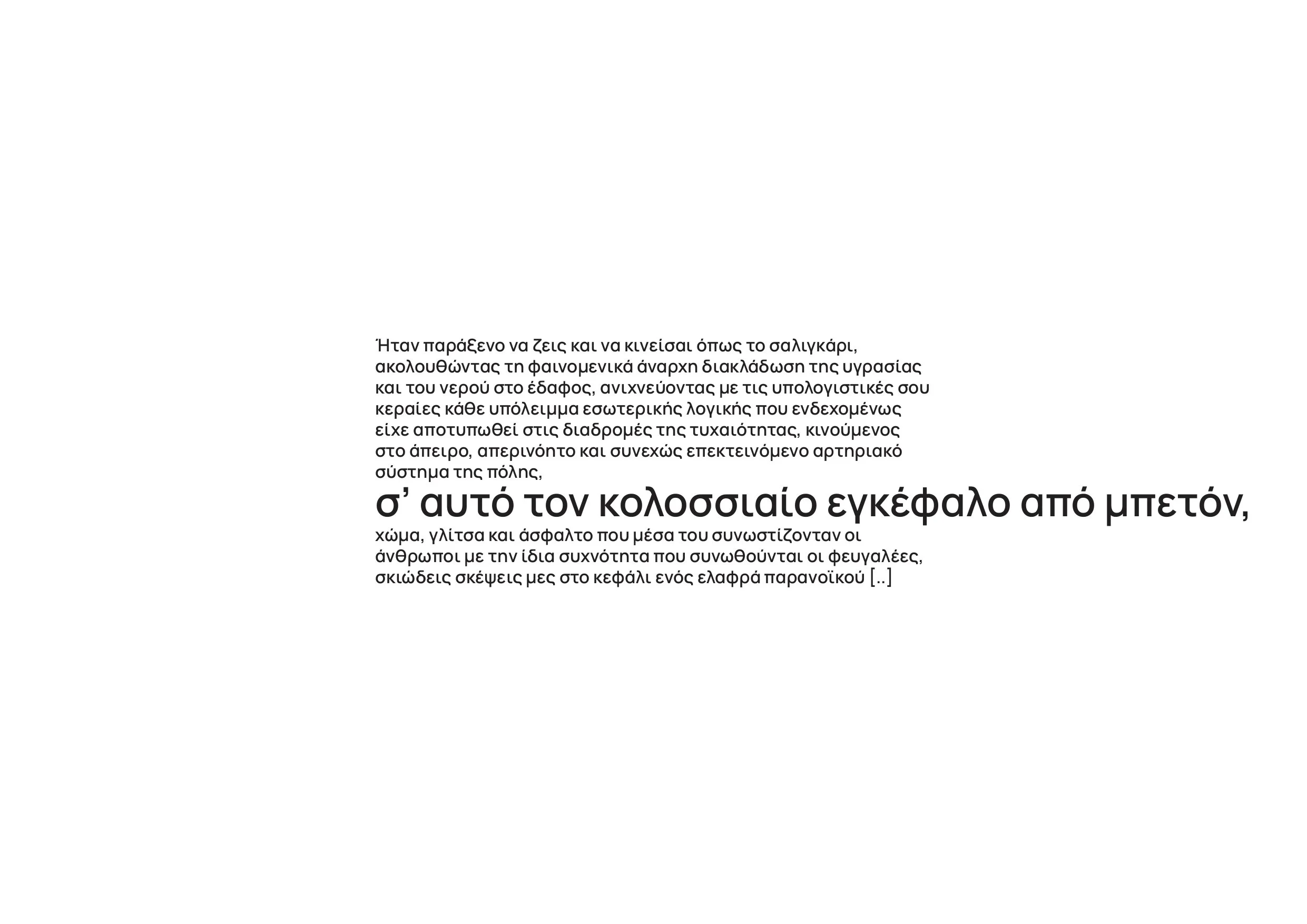
This project constitutes an experimental visualization of Nikos Mantis’s novel “The Blind”, through the convergence of three artistic practices. An innovative architectural digital design that simulates the transmission of information within the brain serves as the matrix hosting images of Athens, as these converse with excerpts from the book. Space, images, and words are connected to enact the processes of a cognitive journey—the conceptual core of the novel, according to the interpretive lens of the working group.
The structure of this digital work, which can have multiple applications, is non-linear, reflecting the connections that occur in neural networks—that is, the way information is transmitted to shape our thought. Within this framework, the illustration of the plot is set aside. The photographic images and videos presented illuminate points of a cognitive trajectory, which encompasses curiosity and search, dead ends, connection and juxtaposition of information.
There is no beginning, middle, and end, as is also the case in a process of continuously understanding an environment, as also happens in the book itself, whose plot guides the reader through labyrinthine paths.
2021–2022
Το project αποτελεί μία πειραματική απεικόνιση του μυθιστορήματος του Νίκου Μάντη «Οι Τυφλοί», μέσα από τη σύγκλιση τριών καλλιτεχνικών πράξεων. Ένας καινοτόμος αρχιτεκτονικός ψηφιακός σχεδιασμός που προσομοιάζει την μετάδοση της πληροφορίας μέσα στον εγκέφαλο αποτελεί τη μήτρα φιλοξενίας εικόνων της Αθήνας, καθώς αυτές συνομιλούν με αποσπάσματα του βιβλίου. Ο χώρος, οι εικόνες και οι λέξεις συνδέονται για να υλοποιήσουν τις διαδικασίες ενός γνωσιακού ταξιδιού—τον νοηματικό πυρήνα του μυθιστορήματος, σύμφωνα με το ερμηνευτικό πρίσμα της ομάδας εργασίας.
Η δομή του ψηφιακού αυτού έργου, το οποίο μπορεί να έχει πολλαπλές εφαρμογές, είναι μη-γραμμική αντανακλώντας τις συνδέσεις που συμβαίνουν στα νευρωνικά δίκτυα, στον τρόπο δηλαδή που εταδίδεται η πληροφορία για να διαμορφωθεί η σκέψη μας. Σε αυτό το πλαίσιο η εικονογράφηση της πλοκής παραμερίζεται. Οι φωτογραφικές εικόνες και τα βίντεο που παρουσιάζονται φωτίζουν σημεία μιας γνωσιακής διαδρομής, η οποία ενέχει την περιέργεια και την αναζήτηση, αδιέξοδα, σύνδεση και αντιπαραβολή πληροφοριών.
Δεν υπάρχει αρχή, μέση και τέλος, όπως συμβαίνει και σε μία διαδικασία συνεχούς κατανόησης ενός περιβάλλοντος, όπως συμβαίνει και στο ίδιο το βιβλίο, του οποίου η πλοκή κατευθύνει τον αναγνώστη σε δαιδαλώδεις διαδρομές.
2021– 2022
-
Born in 1952 in Athens. Up until 1974 he lived in Paris and from then onwards he divided his life between Paris and Athens, until when he moved permanently back to Greece.
He has a dual citizenship, both Greek and French.
He studied History in Paris (Université Paris VII and Ecole des Hautes Etudes en Sciences Sociales).
He has been working as a journalist since 1989, mostly in the Greek and foreign press. Among others he has worked with the international editions of: Liberation, L’ Hebdo, Vice, etc., as well as the Greek editions of various newspapers and magazines.
His works have been shown in solo exhibitions (Gallery Elika and Thessaloniki Museum of Photography) and he has taken part in a number of group shows. His photos are included in several photographic publications like the exhibition catalogue of The Aegean Archipelagos, an Aquatic Metacity (2006, Greek participation at the Biennale of Architecture in Venice), and Kyvotos (2010, Greek participation at the Biennale of Architecture in Venice). He was a member of The Depression Era collective. Some of his works belong to private collectors and the Thessaloniki Museum of Photography. In 2021, he published in Greece a book called “Δενυπάρχειτίποταπίσωαπόμίαφωτογραφία” (There is nothing behind a picture), ed. Polis. -
Eirini Vourloumis was born in 1979 and raised in Athens, Greece and is of Greek and Indonesian background. Vourloumis is a graduate of Parsons School of Design and of the Columbia Graduate School of Journalism in New York.
She began her career as a contributing photographer for the New York Times Metro section and is currently freelancing for various international publications from Greece, focusing on covering the ongoing economic and refugee crises. She has also contributed as a writer for Lens, the New York Times photojournalism blog.
Her current personal work has shifted from pure reportage and combines a documentary and conceptual photographic approach, in which she explores social and political environments to reflect their dynamic within the context of the economic crisis in her home country.
Her reportage clients include The New York Times, The Wall Street Journal, The New Yorker, Time, Le Monde, Business Week, and The Guardian, among others. She has exhibited at the Bozar Museum in Brussels, the Martin Gropius Bau Musuem in Berlin and the Benaki Museum in Athens. Her photographs have been acquired by the Dakis Joannou Collection and her first book, “In Waiting”, was released in October 2017 by the German publisher Hatje Cantz. Vourloumis is a member of the Greek Depression Era collective. She just launched her first feature hybrid documentary, “The Secrets of the Owl”. A musical portrait of present day Athens seen through the lives of its taxi drivers. -
Emmanouil Zaroukas is an architect, researcher and educator. His research interest is on posthuman design by focusing on the speculative capacities of artificial neural networks, machine learning and machinic pareidolia. Emmanouil is a registered architect in Greece holding a diploma in Architecture from the Aristotle University of Thessaloniki, and a postgraduate degree in Digital Architecture Production from the Institute of Advanced Architecture of Catalonia (IAAC) Spain. Currently Emmanouil is a Visiting Lecturer at the BPro MArch Urban Design at the Bartlett School of Architecture (UCL) where he leads the Histories and Theories module and teaches histories and theories related to computational design processes applied at multiscalar built environments. He has presented his research work at various international fora. Emmanouil Zaroukas is also the co-founder of Architecture and Construction Team an architectural practice that specialises on residential projects in Greece.
-
Dr Alexandra Athanasiadou works at the intersection of visual practice and philosophical inquiry. She is the founder of the PHLSPH Lab: Image Thinking Lab.
For fifteen years, she has worked with images—inside museums, galleries, and universities, but never quite contained by any of them. Her route through the photography world has taken her from the Museum of Photography in Thessaloniki to Candlestar in London, from European platforms like Transeurope PhotoProject to curating and setting up a photography award with IOM Central Asia, from a research program at the University of Crete to her current roles as a Special Scientist at the Technological University of Cyprus, an external tutor on the MA Photography and Society at the Royal Academy of the Arts in The Hague, and a teaching position at the School of Visual and Applied Arts, Aristotle University of Thessaloniki.
Along the way, she built something between the usual categories: a practice that draws on academic training (a PhD in Aesthetics; the Courtauld; Oxford; Panteion University) but refuses to stay in its lane. The work sits at the edges—close enough to both the art world and the academy to know their rules, far enough in to move freely between them.