THE LAB
THE LAB
An experiment
Contributing to interdisciplinary knowledge generated through visual structures and artistic processes.
For the artist working beyond the artwork.
For the theorist expanding into visual formats of thinking.
For the public, a platform that treats the image differently.
From image to visual thinking
PHLSPH began as Philosophy and Photography [2021]: a space where philosophers used the image as a matrix for thinking beyond its frame—while also bringing insight into artists’ work.
PHLSPH is now [2025] oriented toward the processes of image-making through which visual artists construct their work.
We believe that certain image-making processes carry a diagrammatic intelligence: a capacity to compose relations, and open new possibilities of thought. We aim to unearth this intelligence by learning from artists.
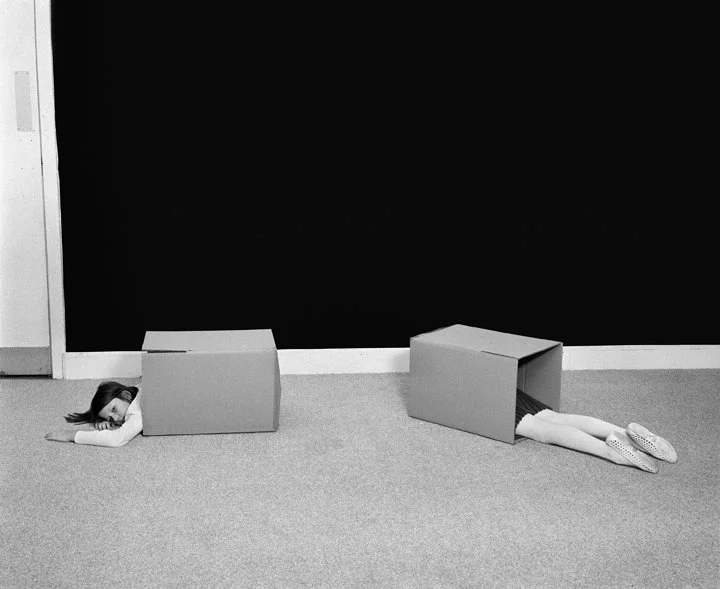
© Clare Strand
Reverse engineering and metapherein par excellence
We are into blueprints—not fixed plans, but dynamic schemas: visual operations, through which relations take form and can become transferable [metapherein] into other fields.
To detect them, we collaborate with artists deeply invested in the process of the work—whether through photography, moving image or computation.
What interests us is what happens when these schemas migrate: from artistic practice into other formats of thinking that could gain from the underlying knowledge images carry—how an argument is structured, how an exhibition organises experience, or how complexity is patterned across a given domain.
Not quite sitting neatly in any field. A blessing and a curse. PHLSPH is a platform for artists, theorists, philosophers, researchers, and thinkers from other disciplines willing to step out—and experiment.
Ready?
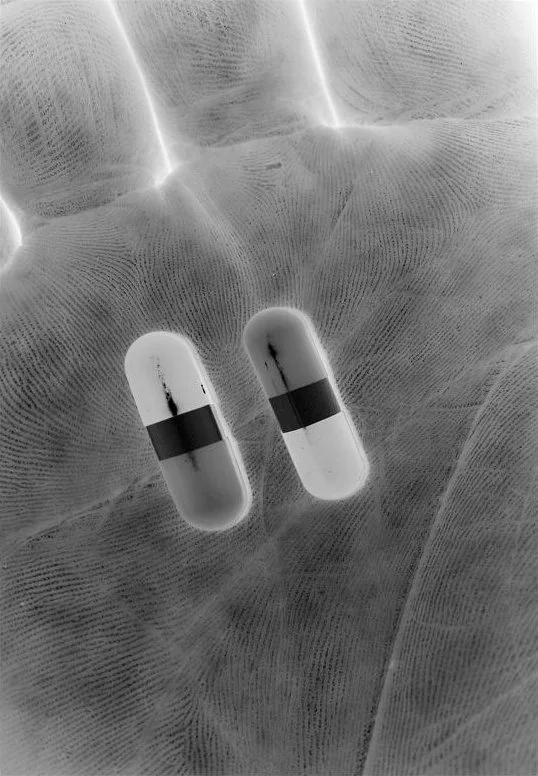
© Clare Strand
Alongside the lab’s research, one-on-one mentoring runs in parallel. For projects that need fresh eyes. More on that here.
Alexandra Athanasiadou, PhD, works at the intersection of visual practice and philosophical inquiry. She is the founder of the PHLSPH Lab: Image Thinking Lab.
For fifteen years, she has worked with images—inside museums, galleries, and universities, but never quite contained by any of them. Her route through the photography world has taken her from the Museum of Photography in Thessaloniki to Candlestar in London, from European platforms like Transeurope PhotoProject to curating and setting up a photography award with IOM Central Asia, from a research program at the University of Crete to her current roles as a Special Scientist at the Technological University of Cyprus, an external tutor on the MA Photography and Society at the Royal Academy of the Arts in The Hague, and a teaching position at the School of Visual and Applied Arts, Aristotle University of Thessaloniki.
Along the way, she built something between the usual categories: a practice that draws on academic training (a PhD in Aesthetics; the Courtauld; Oxford University - St.Hilda’s College; Panteion University) but refuses to stay in its lane. The work sits at the edges—close enough to both the art world and the academy to know their rules, far enough in to move freely between them.
The lab is where that space becomes visible.
Conceptual engineering. Imagination as a tool for disruption.