
Projects: Follow the Glitch
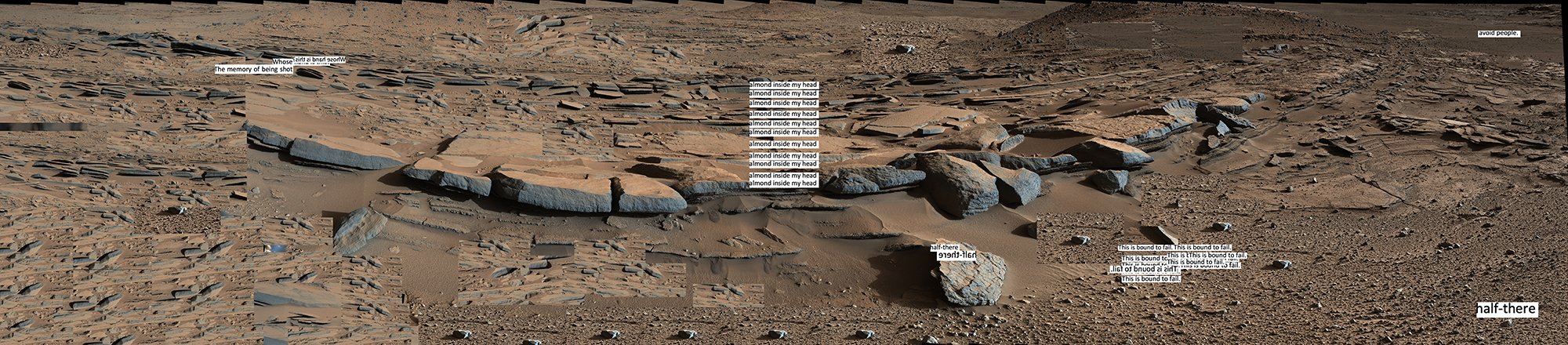
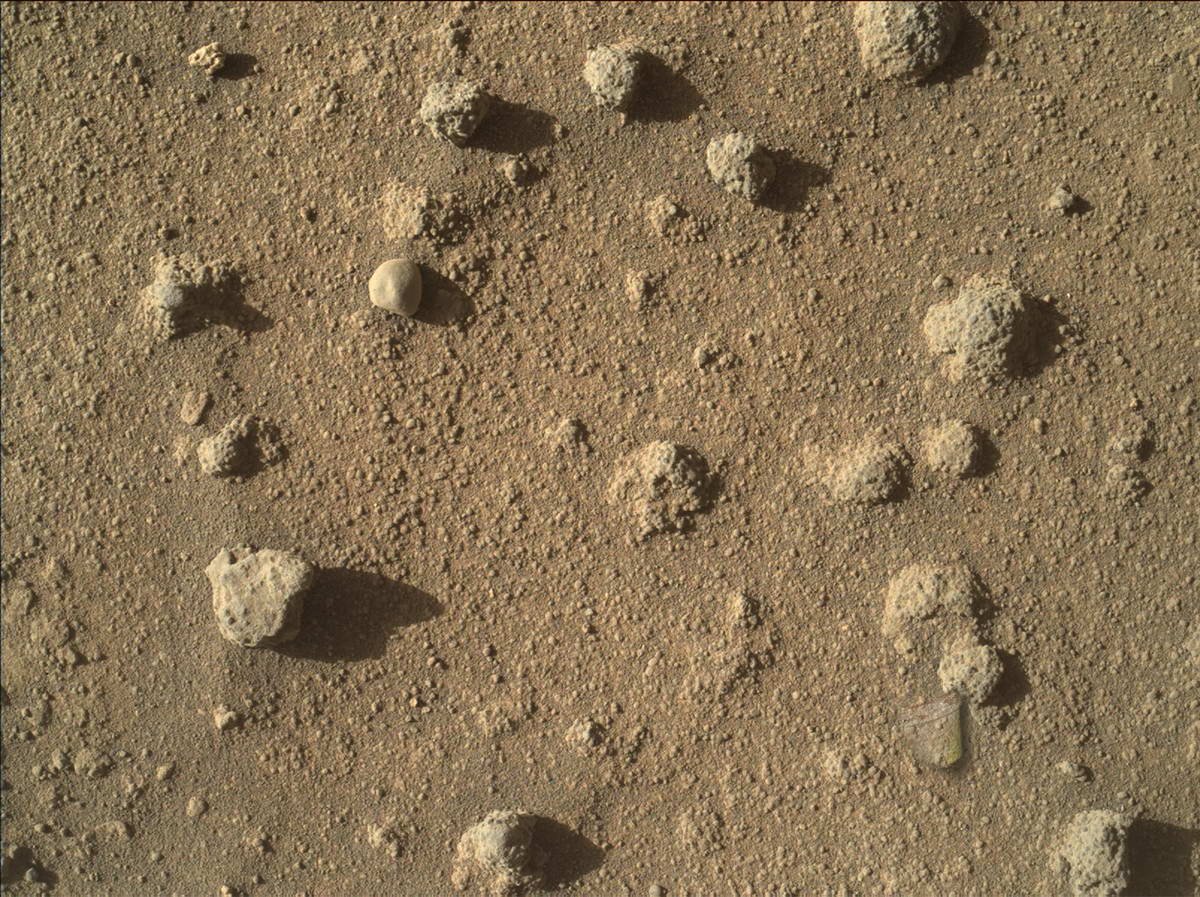
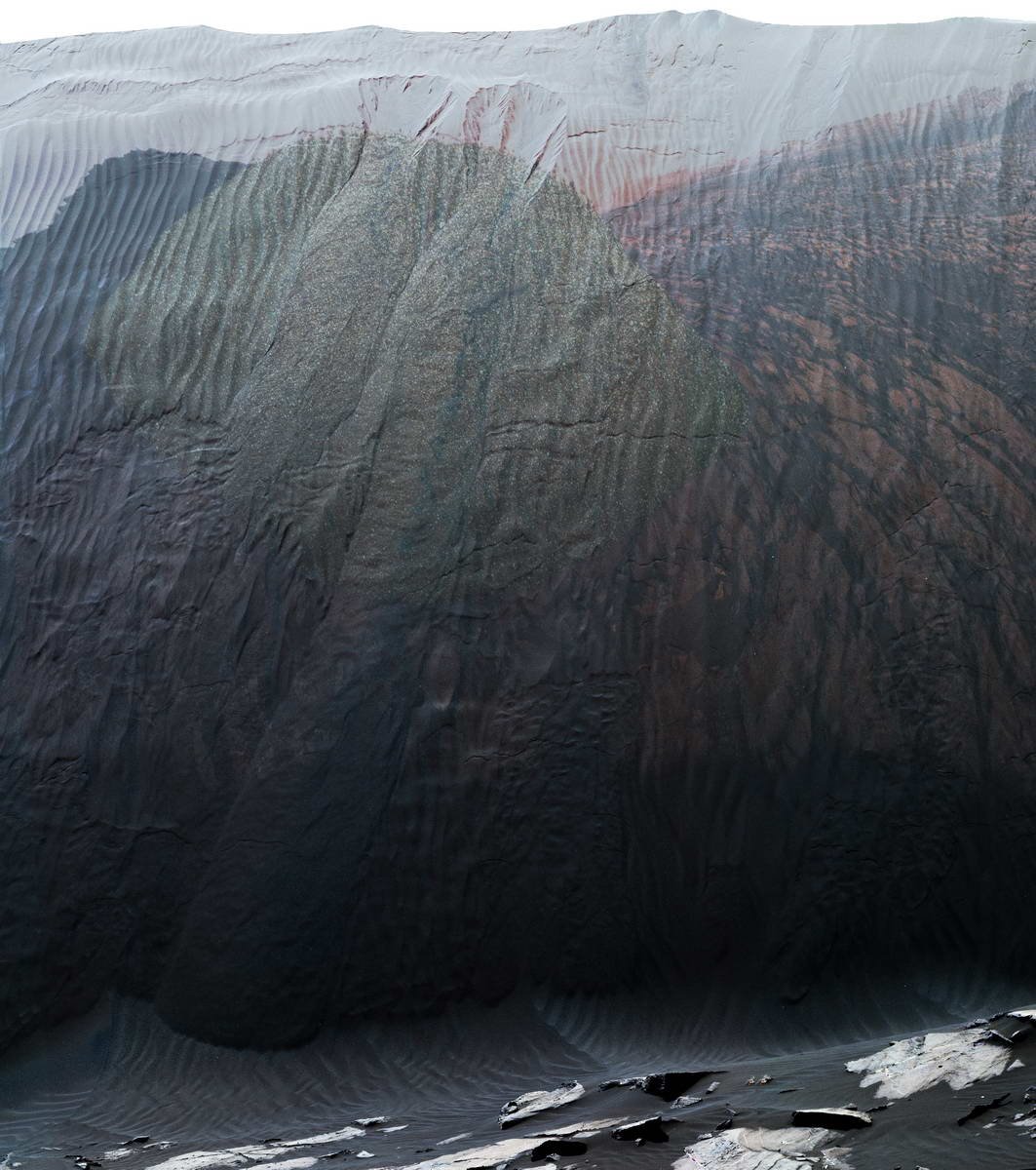
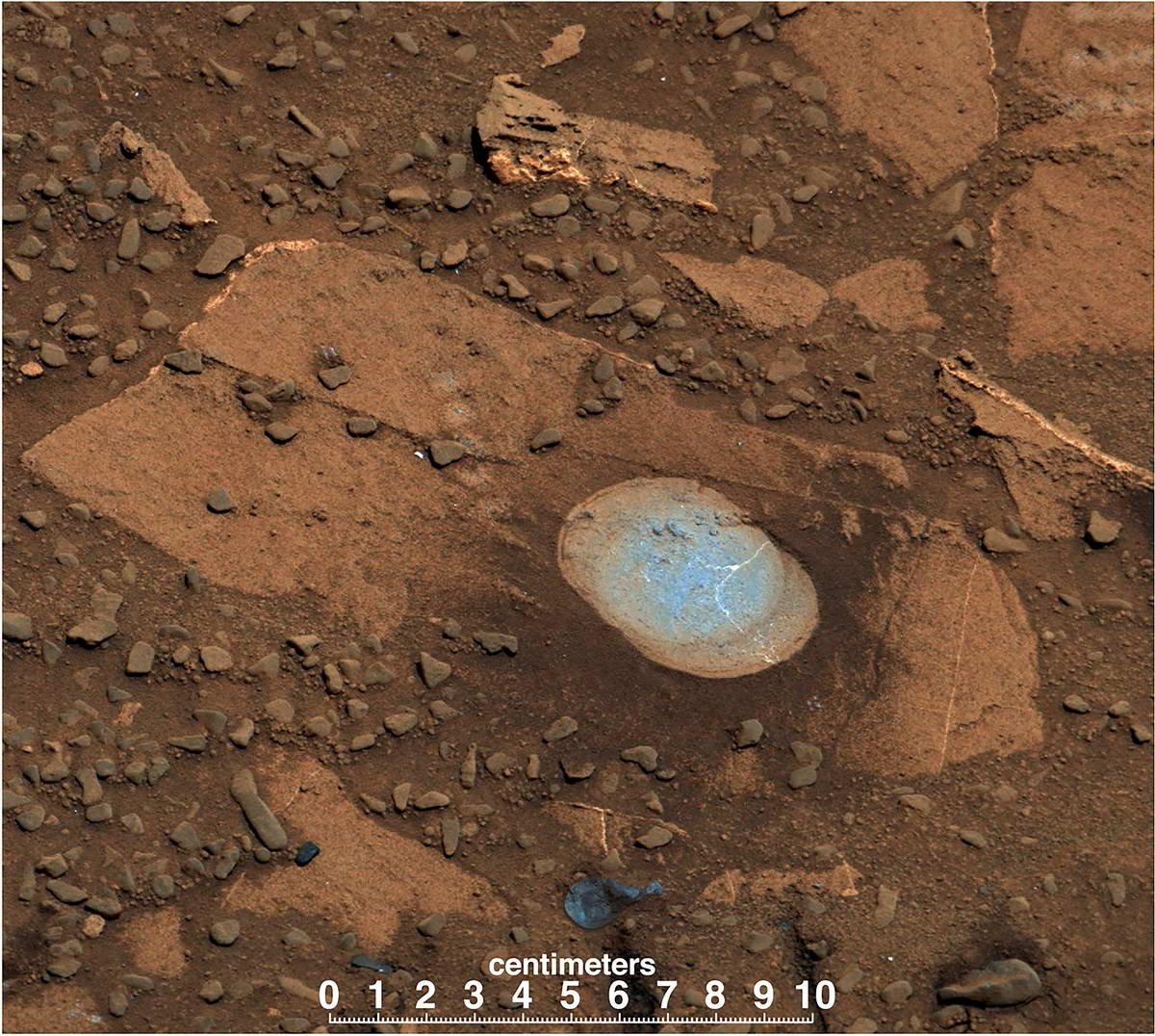
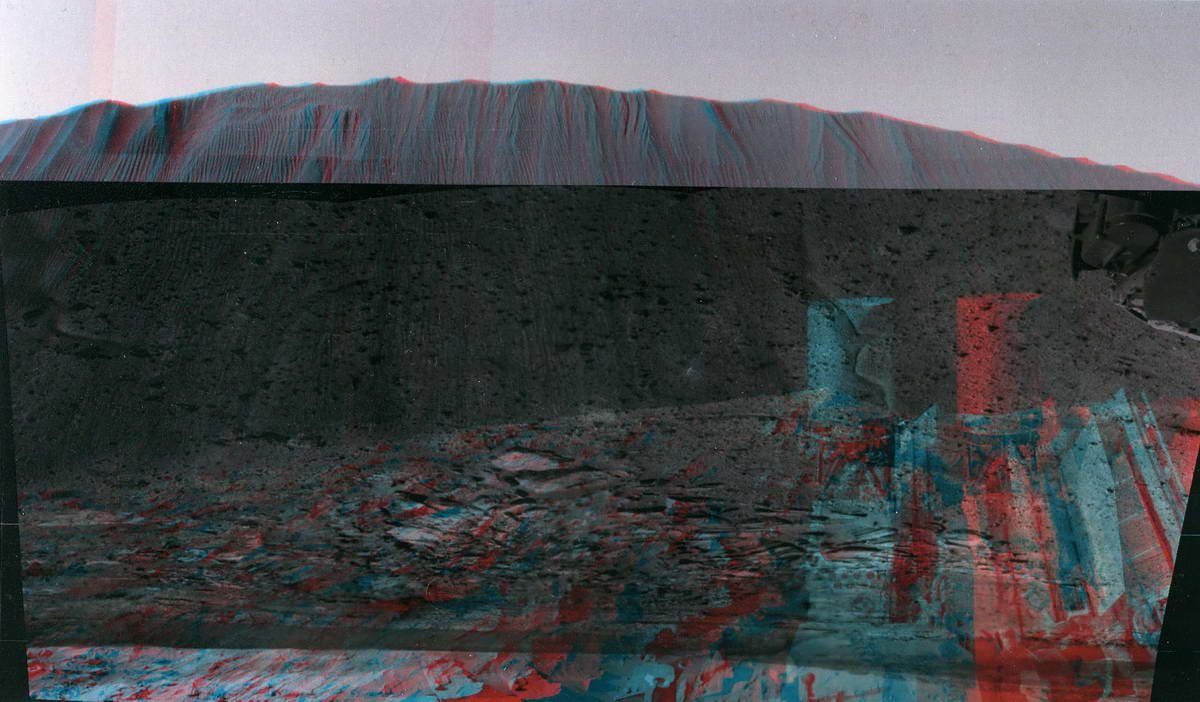
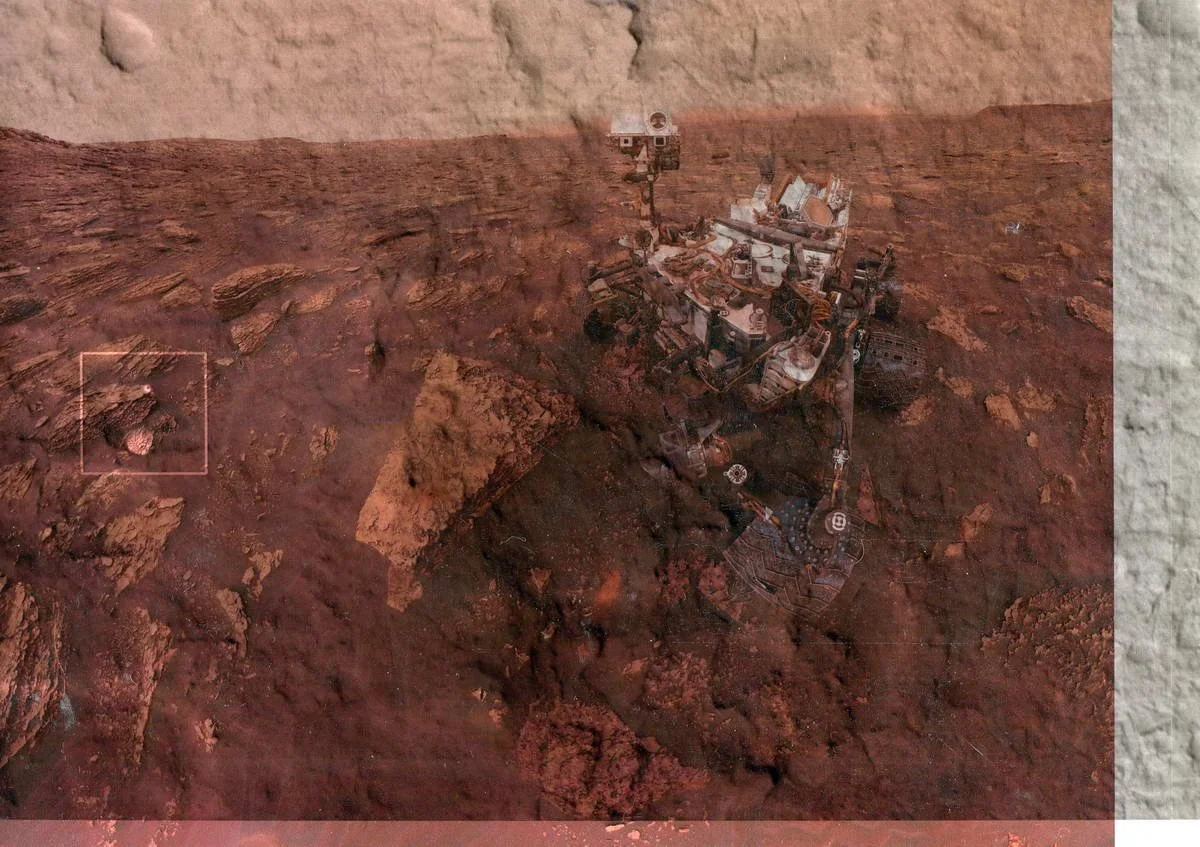
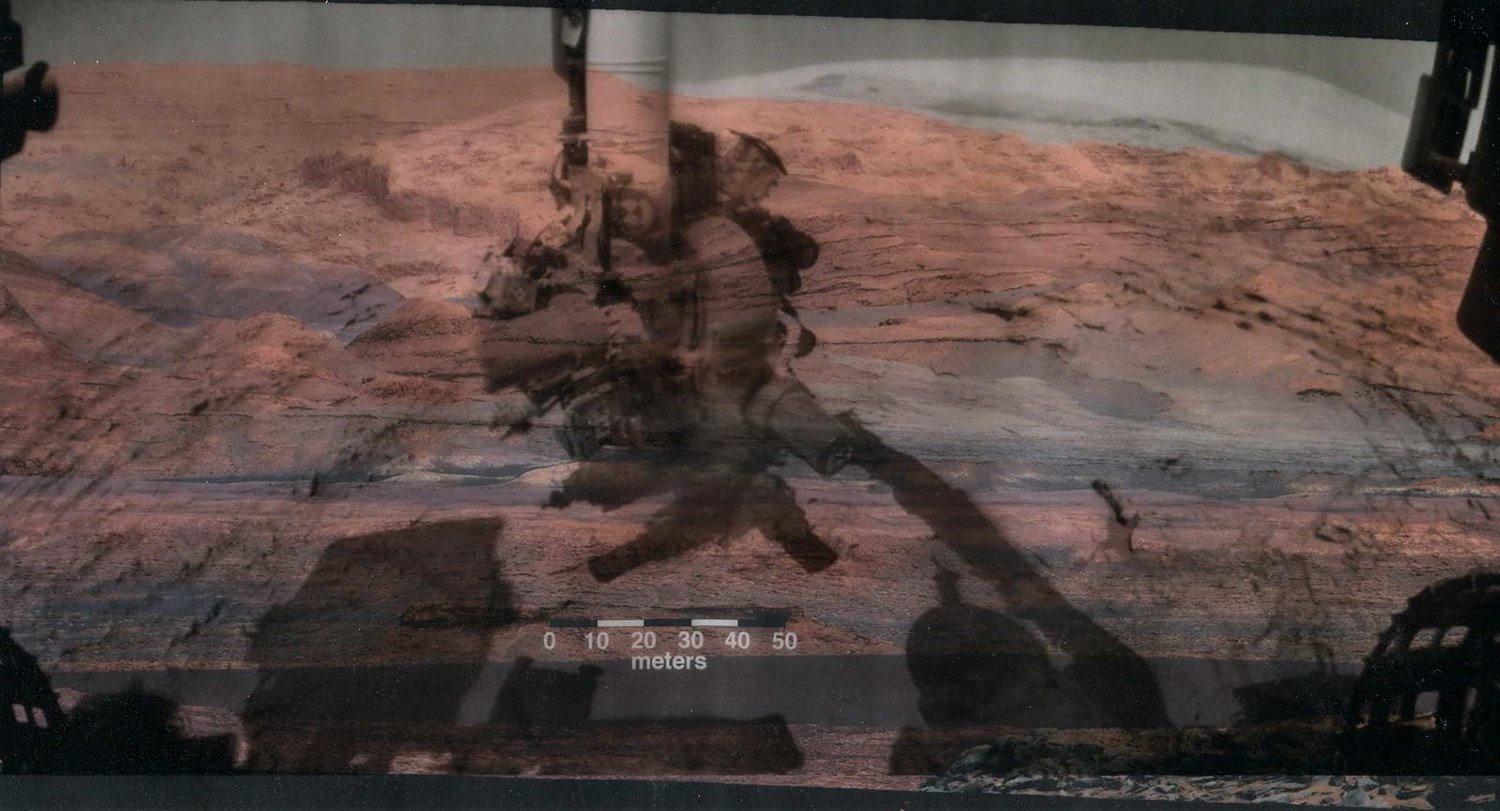
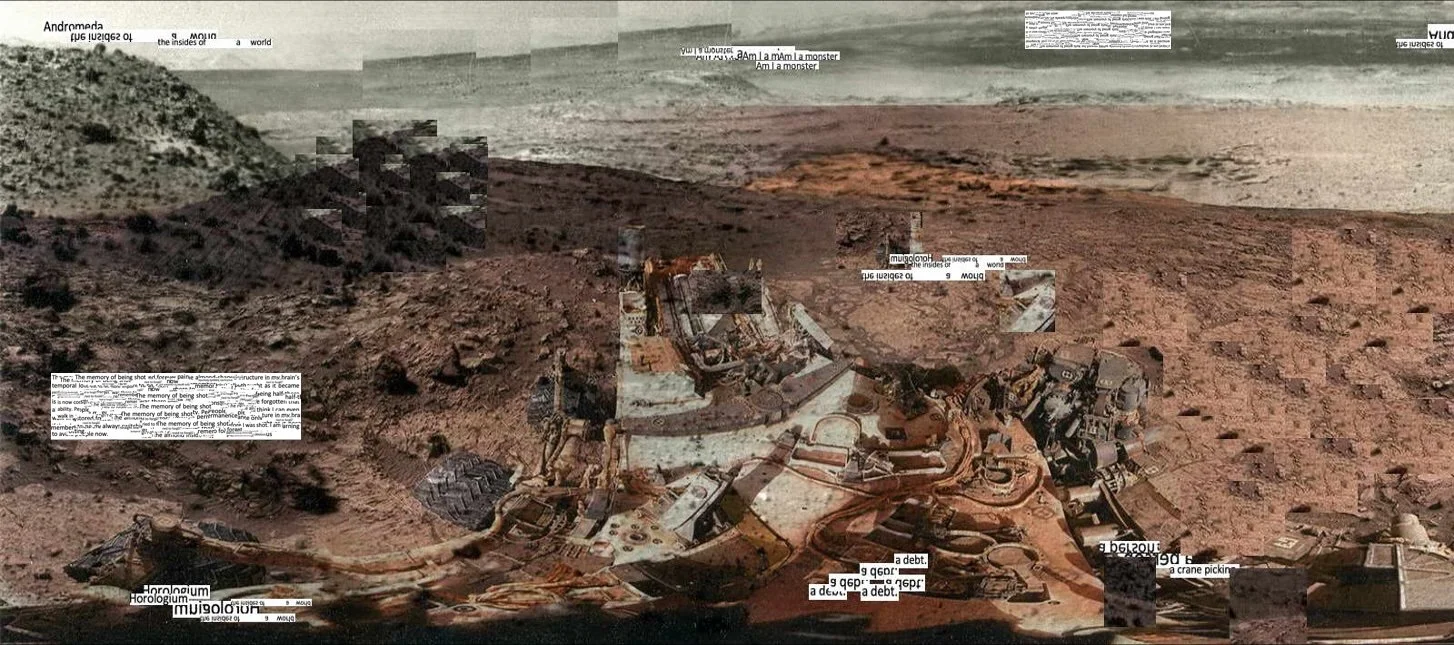
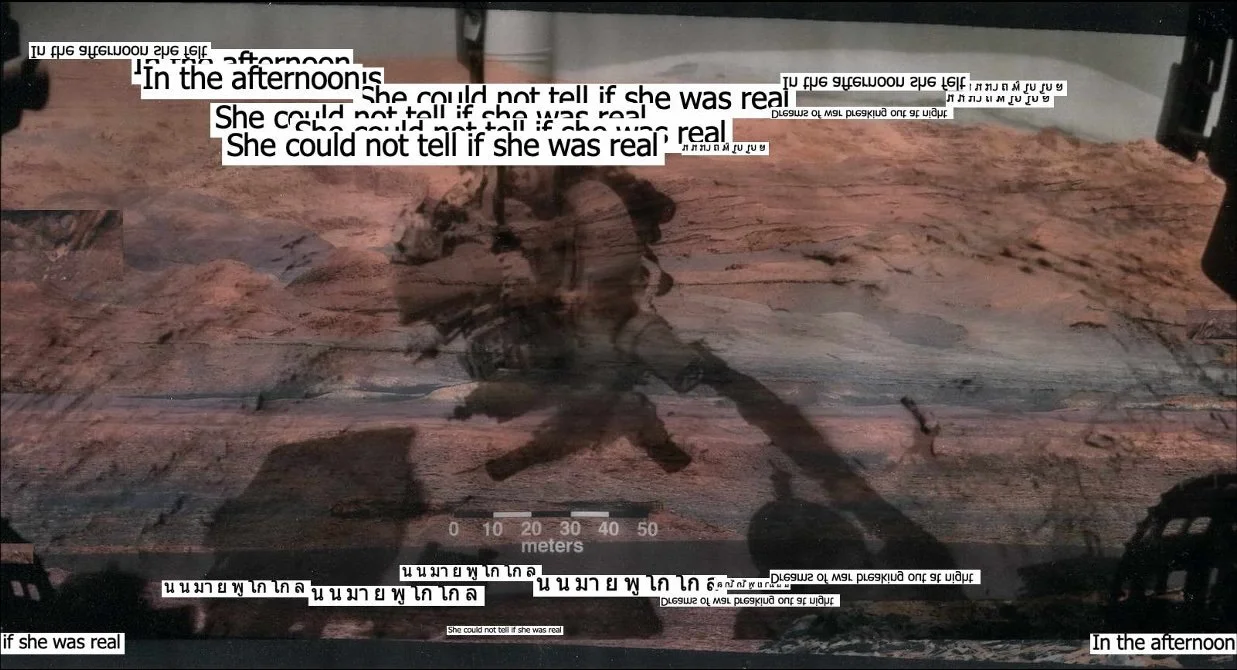
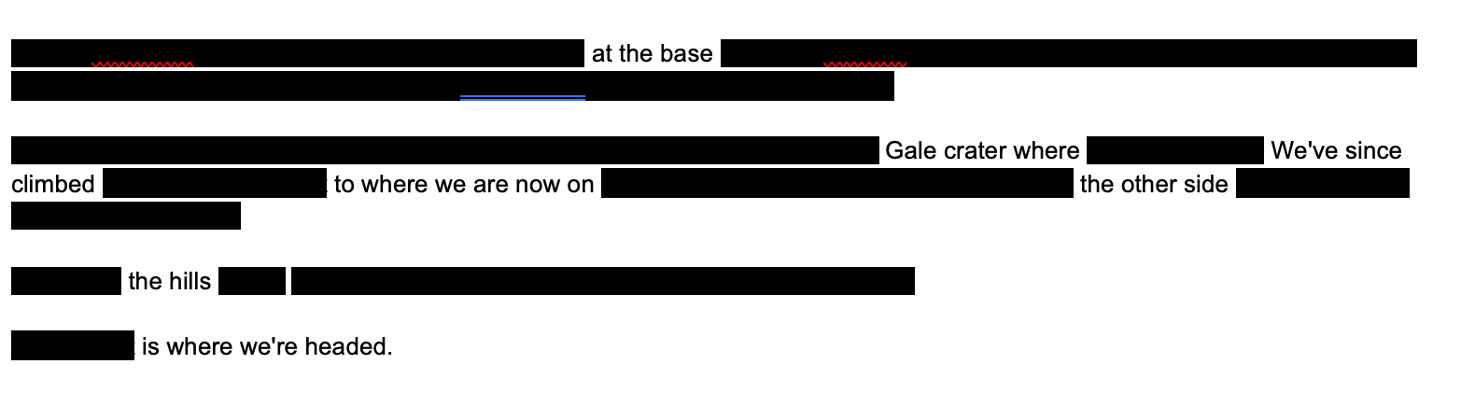
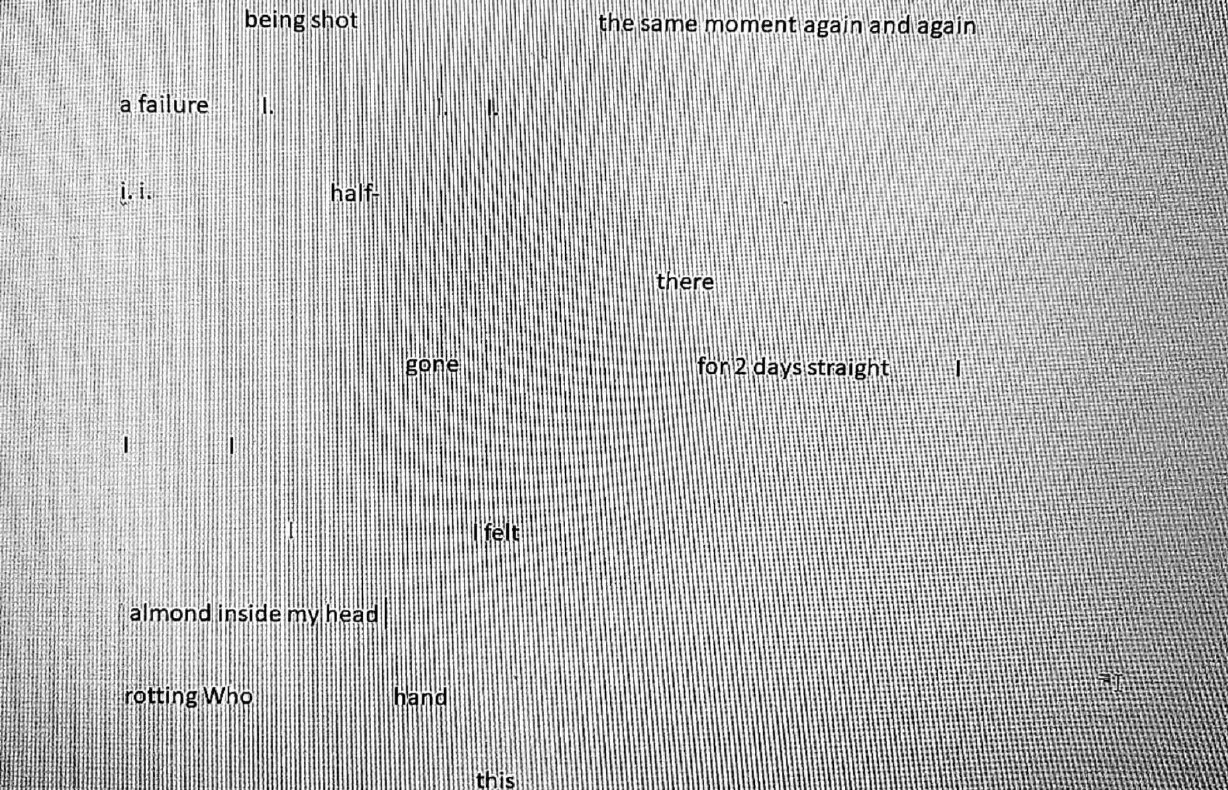
The research project Follow the Glitch concerns the investigation of the dynamic relationships that develop upon the appearance of a “micro-system failure” [glitch] and the fields of meaning that emerge through them. This investigation was conducted using as an archive a portion of the thousands of photographs that NASA makes publicly available on the internet, related to the missions to Mars. Most of the images, in order to be utilized, already contain within them some form of intervention. How could we know whether some of them have also undergone a glitch?
How predetermined is the reception/reading of either images or texts, and where do the limits of meaning lie?
Within this working framework, the artistic research and the dialogue that developed between visual artist Thodoris Zafeiropoulos and poet Thodoris Chiotis deviated from the usual way of viewing the glitch. In this body of work, one does not find images that formally classify at first glance as glitch art—that is, aestheticized images containing some kind of failure, as is common in the field of digital art.
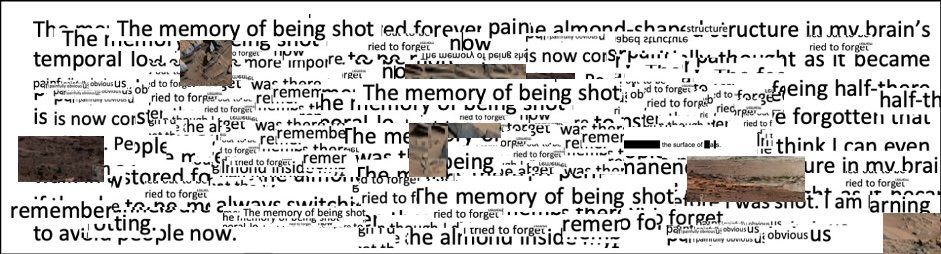
The images presented, in combination with the textual works, invite the viewer into a participatory mode of viewing the work—to locate the fault, and then to follow it in order to trace the narrative that unfolds.
Το πρότζεκτ Follow the Glitch, αφορά στη διερεύνηση των δυναμικών σχέσεων που αναπτύσσονται στην εμφάνιση μιας «μικροβλάβης συστήματος» [glitch] και των νοηματικών πεδίων που προκύπτουν μέσα από αυτές. Η διερεύνηση αυτή έγινε χρησιμοποιώντας ως αρχείο ένα μέρος από τις χιλιάδες φωτογραφίες που η ΝASA δημοσιοποιεί στο διαδίκτυο και σχετίζονται με τις αποστολές στον Άρη. Οι περισσότερες εικόνες για να αξιοποιηθούν ενέχουν μέσα τους ενός είδους παρέμβαση. Άραγε πώς θα μπορούσαμε να γνωρίζουμε εάν κάποιες από αυτές έχουν υποστεί και glitch;
Πόσο προκαθορισμένη είναι η πρόσληψη/ανάγνωση είτε των εικόνων είτε των κείμενων και που βρίσκονται στα όρια του νοήματος;
Μέσα σε αυτό πλαίσιο εργασίας η καλλιτεχνική έρευνα και ο διάλογος που αναπτύχθηκε ανάμεσα στον εικαστικό Θοδωρή Ζαφειρόπουλο και στον ποιητή Θοδωρή Χιώτη, παρέκλινε από το συνηθισμένο τρόπο θέασης του glitch. Στο σώμα αυτών των έργων δεν εντοπίζονται εικόνες που φορμαλιστικά κατατάσσονται με την πρώτη ματιά στο glitch art, δηλαδή αισθητικοποιημένες εικόνες που εμπεριέχουν κάποια βλάβη, όπως συνηθίζεται στο πεδίο της ψηφιακής τέχνης [digital art].
Οι εικόνες που παρουσιάζονται σε συνδυασμό με τα κειμενικά έργα προσκαλούν τον θεατή σε ένα συμμετοχικό τρόπο θέασης του έργου—να εντοπίσει το σφάλμα, και έπειτα να το ακολουθήσει για να παρακολουθήσει το αφήγημα που δημιουργείται.

-
Theodoros Chiotis’ publications include Screen (Paper Tigers Books, 2017), limit.less: towards an assembly of the sick (Litmus, 2017), κράμα (ή, γλώσσα_μηχανή) ([φρμκ], 2025) and counterfactual (Steel Incisors, 2026). He is also the editor and translator of the anthology Futures: Poetry of the Greek Crisis (Penned in the Margins, 2015). His work has appeared in Litmus, Datableed, Tripwire, Poetry Wales, Shearsman, Adventures in Form, Austerity Measures, Tenebrae, Forward Book of Poetry 2017, aglimpseof, Visual Verse, lyrikline, Otoliths, amongst others. He has translated contemporary British and American poets into Greek and Aristophanes into English. He is a member of the editorial board of the Greek literary magazine [φρμκ]. His project Mutualised Archives, an ongoing performative interdisciplinary work, received the Dot Award by the Institute for the Future of Book and Bournemouth University; he has also been awarded a High Commendation from the Forward Prizes for Poetry in 2017.
-
Theodoros Zafeiropoulos was born in 1978. He graduated from the School of Fine Arts, Aristotle University of Thessaloniki (1998–2003). He participated in the Erasmus program in the University of Barcelona (2001). He graduated from the MFAof ASFA (2004–2006). He graduated and was honored with the Paula Rhodes Memorial Award from the MFA program of the School of Visual Arts, New York USA as recipient of the Fulbright, Gerondelis & Al.Onassis Foundations scholarships (2007–2009). He participated in the Skowhegan School of Painting and Sculpture (2009). In 2016 he concluded his PhD dissertation in the School of Architecture, University of Thessaly. Since 2001 he has presented 10 solo shows and has participated in more than 100 international group shows, residencies, and projects in Greece, USA, and elsewhere. He received commissions to create site-specific installations in many institutions and Foundations including the Morton Arboretumin Lisle Illinois, USA, the Museum of Civil Aviation in Athens, Miltech Hellas,Goethe Institute Thessaloniki, Museum of Photography in Thessaloniki and the G&A Mamidakis Foundation. His artworks are part of many public and private collections in Greece, Switzerland, London, USA, and elsewhere. In 2013 he was resident artist in the Flux Factory in NYC and the USF residency program in Bergen, Norway. In 2013 he was selected to represent Greece in the 16th Biennale of European and Mediterranean Young Artists entitled Errors Allowed, in Ancona, Italy. In 2014 he participated in the Photo Biennale of the Thessaloniki Museum of Photography. In 2017 his project HomeLandpresented as collateral event in the 18th Biennale of European and Mediterranean Young Artists entitled Home, Conflict, Dream, Failure in Tirana Albania. In 2017 he was elected as Assistant professor in NTUA, School of Architecture. He lives and works in Athens.
-
Dr Alexandra Athanasiadou works at the intersection of visual practice and philosophical inquiry. She is the founder of the PHLSPH Lab: Image Thinking Lab.
For fifteen years, she has worked with images—inside museums, galleries, and universities, but never quite contained by any of them. Her route through the photography world has taken her from the Museum of Photography in Thessaloniki to Candlestar in London, from European platforms like Transeurope PhotoProject to curating and setting up a photography award with IOM Central Asia, from a research program at the University of Crete to her current roles as a Special Scientist at the Technological University of Cyprus, an external tutor on the MA Photography and Society at the Royal Academy of the Arts in The Hague, and a teaching position at the School of Visual and Applied Arts, Aristotle University of Thessaloniki.
Along the way, she built something between the usual categories: a practice that draws on academic training (a PhD in Aesthetics; the Courtauld; Oxford; Panteion University) but refuses to stay in its lane. The work sits at the edges—close enough to both the art world and the academy to know their rules, far enough in to move freely between them.