
Investigations: Image/Method
What kinds of thinking become visible when artists whose work engages process turn toward a single image through the same set of questions?
Image/Method offers a glimpse into the atelier of the mind. Participating practitioners reflect on a chosen work through a shared set of questions—the same questions, posed to each artist. This consistency is the point: it allows something to surface that individual artist statements rarely reveal.
Not a collection of reflections, but recurring imagistic moves. Operations in the making or transformation of images through which artists reorganise perception, translate phenomena, or open new directions for thought. These moves are editorial readings proposed by PHLSPH-Lab as entry points into the works discussed.
By tracing these movements across different practices, convergences appear. Distinct methodological trajectories become visible. The project maps a terrain where thinking and making are inseparable.
Image/Method has been developed in collaboration with Assistant Professor Efi Kyprianidou, Department of Fine Arts, Cyprus University of Technology (CUT).
-
1. Could you briefly describe the conceptual process you follow in your work?
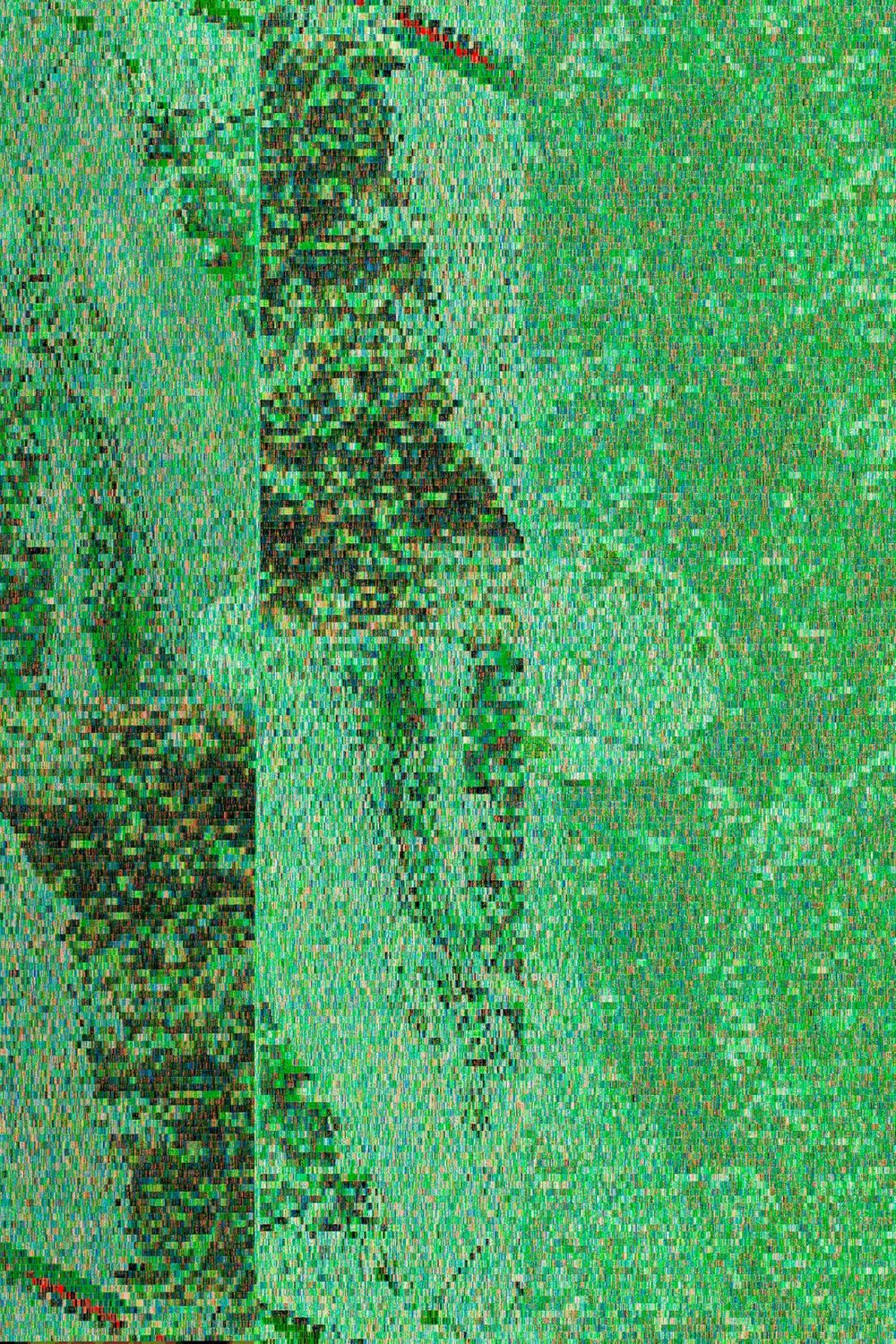
It really depends on the project or the idea. I try to pay more attention to the process of thinking about the image more than the image itself. I guess it's because I’m interested in what is “behind” the image rather than the surface of it. For me, the image is like a fragile container—it holds not just a visual representation, but layers of history, emotion, and meaning. My process often involves intentional distortion, glitch, and fragmentation as ways to reveal what lies beneath: the decisions, the failures, the reinterpretations.
2. Is there a dynamic movement/shape/pattern or even rhythm that you are more drawn to in your visual thinking while working?
I think I’m attracted to the “break”. Kind of the moment where an image fractures, or it fails. Then it becomes something that Its not linear; it’s layered, fragmented, and accumulative. I see it as a way to add layers on top of each other and thus, creating new movement. Each layer, each error, each intervention creates a new rhythm, in a way like memory: never static, always rewriting.
3. Has the image(s) you have chosen here to share shifted your understanding or tapped into an area that was unknown to you? And if so, could you loosely link an idea with an imagistic aspect?
I’m choosing to share images from the series “Palimpsesto.” After much thinking about the project, I realized that for me, this is the most documentary project I could think of, but not in the traditional sense. I’ve come to understand it as a kind of radical documentalism, where the surface of the image does not tell something about the fact, the place, the person. Instead, I focus on the process; the distortion, the code manipulation, the visible marks of construction—revealing the symbolic and emotional weight behind it. In this way, the image doesn’t just present a finished narrative. It becomes an open process.
The project is really about making the process of creating an image visible; the process becomes the work itself, rather than the final image. Gestures are the main thing: the acts of intervention, the decisions, the playful pushing and rethinking of the photograph again and again. Through this, I became interested in how much you can tell about a specific place without actually showing it. By exposing this fragility and manipulation, I realized I wasn’t moving away from documentary—I was getting closer to how memory actually works. I like to think of Images not as a mirror of reality, but a site of constant rewriting. -
1. Could you briefly describe the conceptual process you follow in your work?
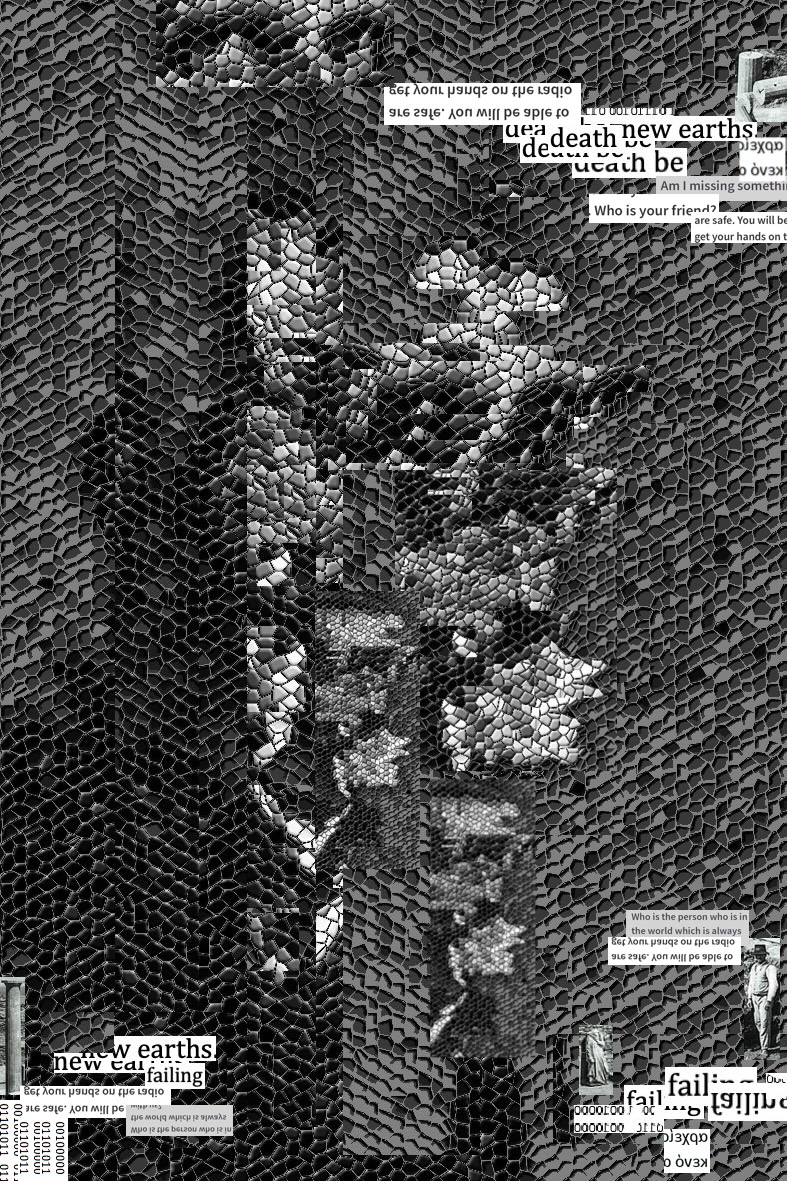
The conceptual process of a given work depends largely on the medium I am using. Like most work, the conceptual process begins in the process of designing, researching, or attempting to think through a specific problem or issue. More than anything, in the beginning I am focused on splicing and overlaying different ideas and sensations. The express purpose is to generate and evaluate whether the accumulated material and prospective techniques can be used towards the execution of the work. This means that I try to brainstorm the context or self-imposed restrictions in order to create a framework which will guide the subsequent development of the work. Often this means that the conceptual process is one of rejecting and erasing previously accumulated work. In the visual work I have been doing in this vein seeks to explore the concept of blurred/blurry vision and the strategies employed to manage this sensory experience.
2. Is there a dynamic movement/shape/pattern or even rhythm that you are more drawn to in your visual thinking while working?
In my work, images are cut, spliced and manipulated in more ways than one. I borrow techniques from the Concrete Poetry movement and reuse them in a way which explores where and how language as a visual object might be folded into image. Repetition is key to my visual work and this is evident in how the work and its components are repeated across the image itself.
3. Has the image(s) you have chosen here to share shifted your understanding or tapped into an area that was unknown to you? And if so, could you loosely link an idea with an imagistic aspect?
This particular image has allowed me to rethink the geometry used in portrait photography and how verisimilitude is essentially a construct. In this sense, I came to think how representation as practice can be amplified to the point that it bleeds into hard-edged abstraction. -
1. Could you briefly describe the conceptual process you follow in your work?
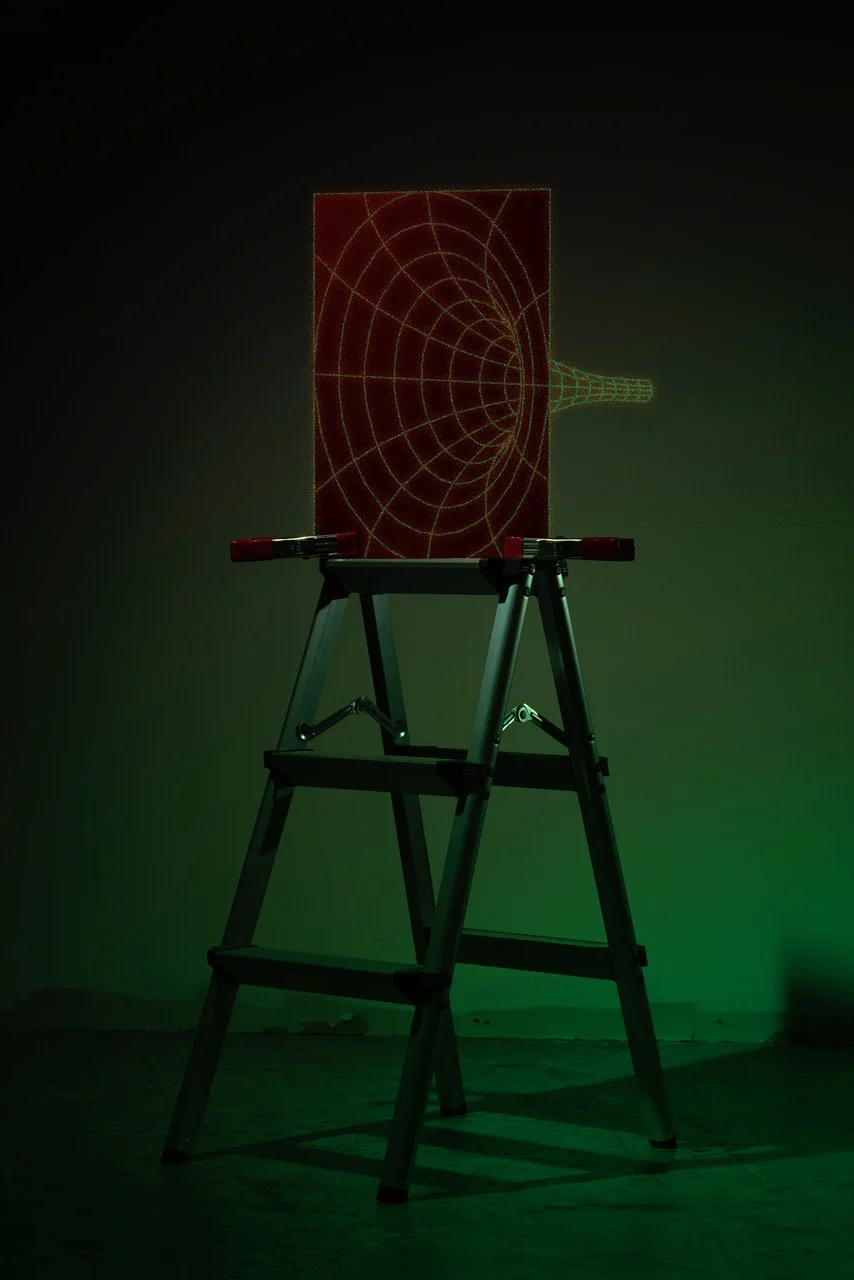
This image is from a series called Psychic Telephone, a collaboration with author Marin Sardy, where she interviewed seven people who believe they have psychic abilities. I use her text as source material for prompts to feed into a text-to-image AI generator to make AI images that I then use as conceptual jumping-off points to make camel-born photographs. Conceptually, the work plays with what we can see and know about the universe, and creativity as a gesture to the divine.
2. Is there a dynamic movement/shape/pattern or even rhythm that you are more drawn to in your visual thinking while working?
Again, this depends; I am flexible about listening to what the project needs and being flexible about my own approach. I am fascinated by what’s not seen in the photographic image, so much of my work is about trying to reveal the unseen or invisible.
I do this so that translation and recursion work together, though. I’m taking one material, be it photographic images from archives or written text, then alchemizing it into something else. Then, revisiting the original state of the material or going through the process again, to see what comes out.
3. Has the image(s) you have chosen here to share shifted your understanding or tapped into an area that was unknown to you? And if so, could you loosely link an idea with an imagistic aspect?
Yes, not just this image specifically, but the series as a whole. I’m very controlling of my process normally, and the act of collaboration (both with my Marin, as well as with technology) cracked up something useful in my process, allowing me to be more open to seeing different ideas visually and conceptually.
Part of what I’ve learned about my own way of working, and also what I struggle with, is feeling that I have fully conceptualized and visualized the art I make before I make it. The pre-cognitive process is so strong (my mind’s eye), that I see what I need to make beforehand, so much so that sometimes I never get out of this cerebral state. Much of my working process now is not theorizing or pre-visualizing too much beforehand. Getting just enough research to begin in the studio. Then, being ok with letting go of what I thought the outcome should be. Making art, for me, is not a thesis defense (not at first, at least), so I have to be willing to let go of everything I thought was working as a way of allowing myself to explore the terrain. I kind of have to trick myself into the “play” or “experimentation” of the physical work, so that I can leave for the unexpected.
With respect to this image, which is titled, “The Ever Day Portal”, it’s conceptually about this very idea. Through play, experimentation, and getting loose in the process of making (i.e., not always having a strict plan), I create room for new visual strategies to emerge that I wouldn’t have discovered if I had pre-planned the image. I call this “going in blind”. -
Meeting the World through the artist—entry points
1. Could you briefly describe the conceptual process you follow in your work?
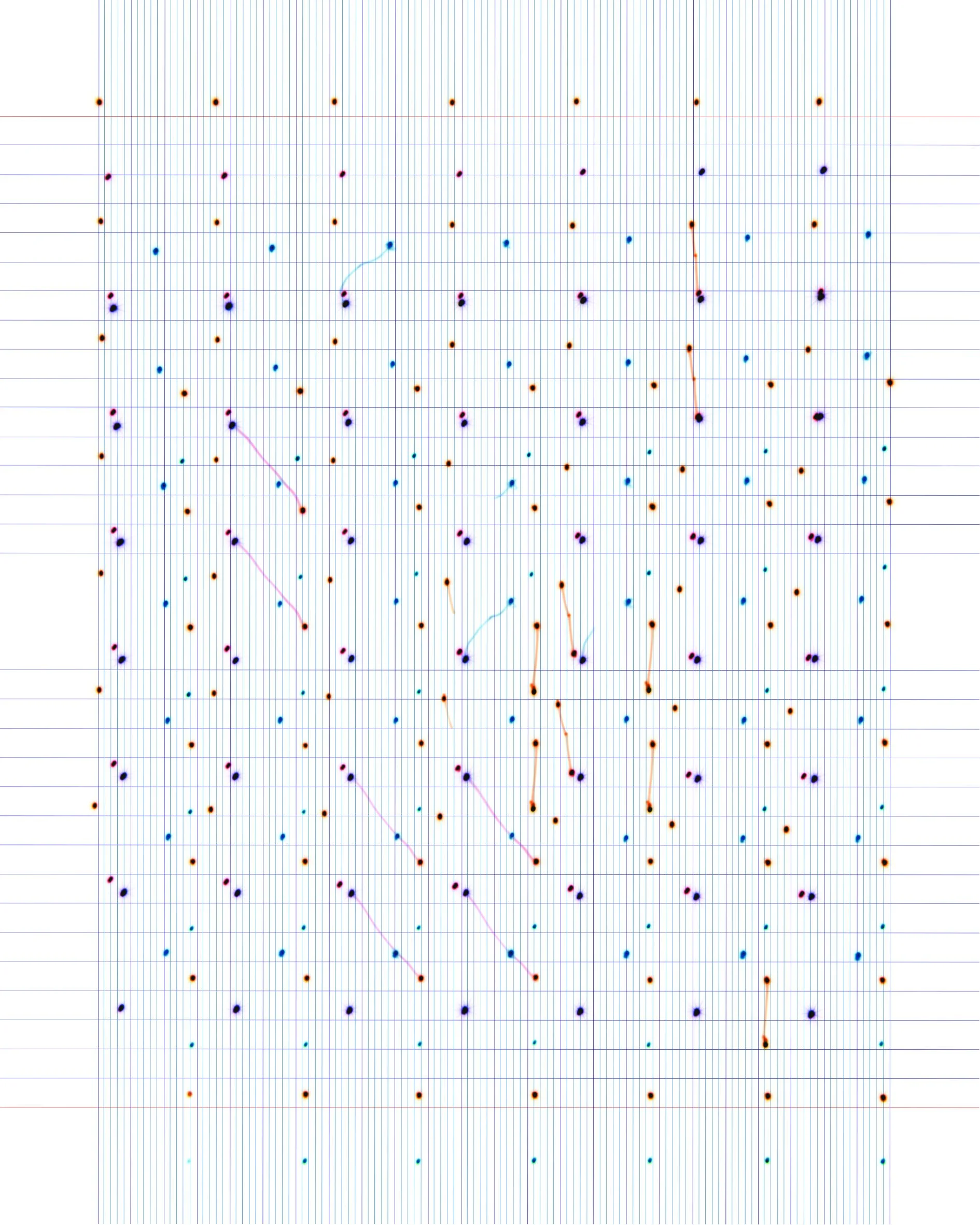
Each project originates from a hypothesis that investigates how different materials respond visually when subjected to an intervention, most often involving movement. The process is inherently performative. The work seeks to examine mechanisms of transformation and to develop a vocabulary of differences and similarities emerging from these processes. Within this framework, the resulting images can be understood less as final outcomes and more as side effects of the investigative process.
2. Is there a dynamic movement/shape/pattern or even rhythm that you are more drawn to in your visual thinking while working? *
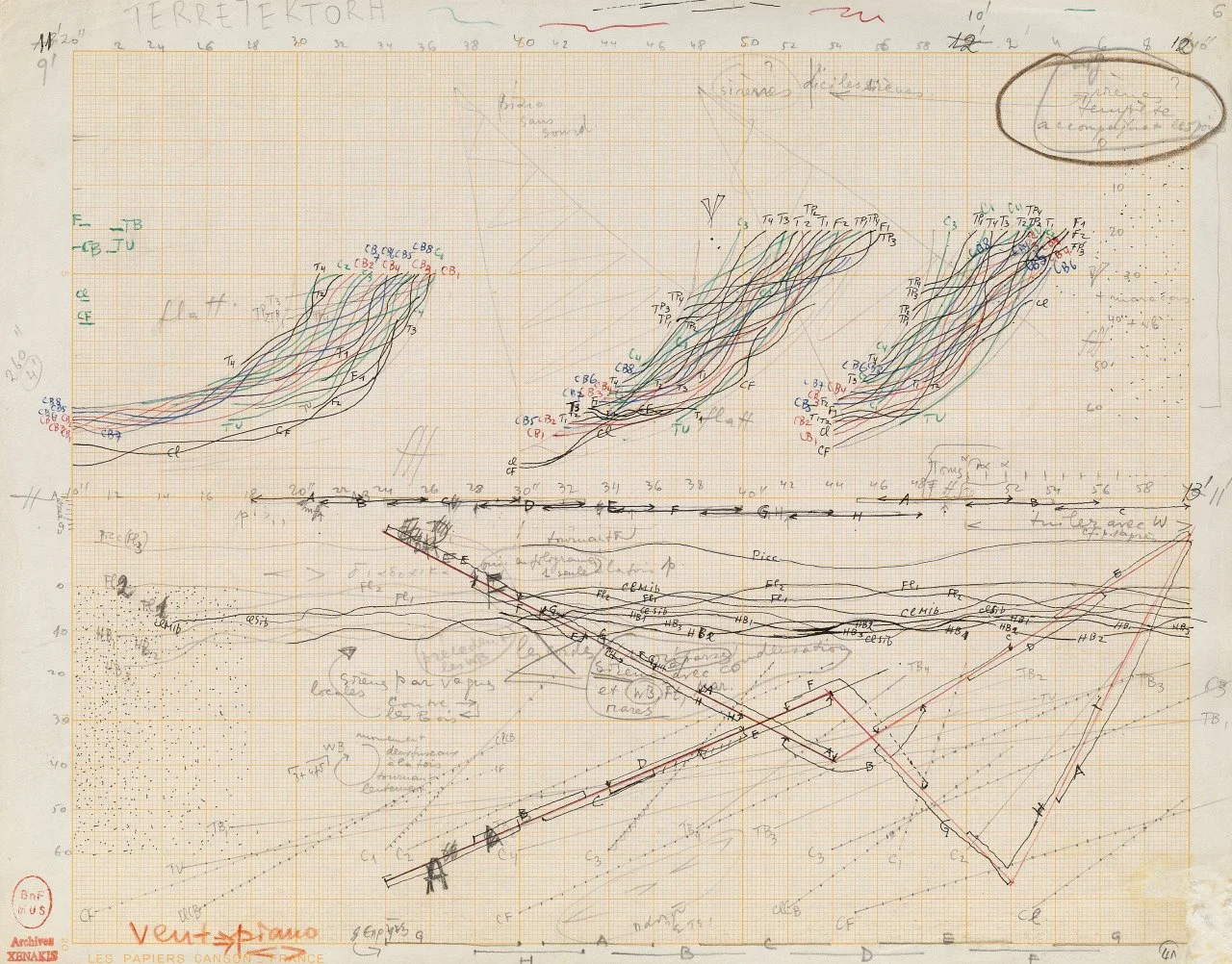
Abstraction plays a central role, stemming from a desire to organize the visual expressions of the process into fundamental elements, lines and points, that relate to one another not only spatially but also temporally. This approach is strongly informed by the language of musical composition. From a formal perspective, the intervals between these expressions of the process, understood as spaces of comparison, become more significant than the images themselves.
3. Has the image(s) you have chosen here to share shifted your understanding or tapped into an area that was unknown to you? And if so, could you loosely link an idea with an imagistic aspect?
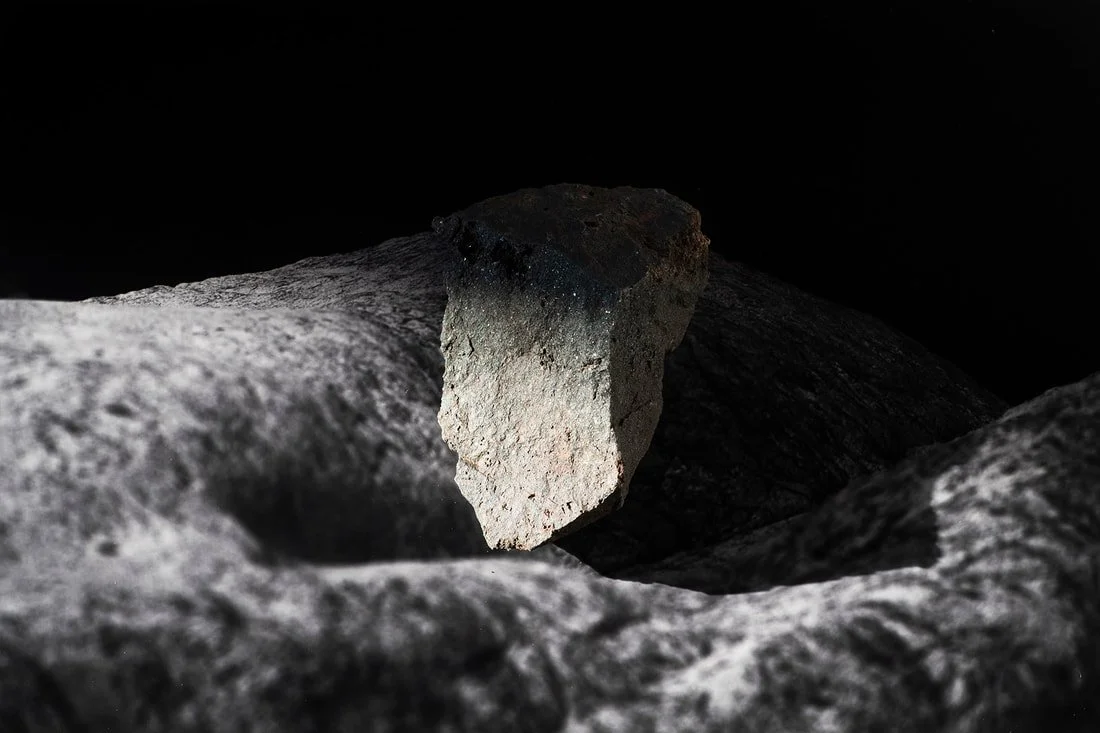
My body of work pursues a demanding objective: to translate the manifestation of phenomena in the world into a visual language that is schematic in nature. To illustrate this approach, one might consider the electrocardiogram, which converts the rhythms of the heart into a form of text. The first image is my own and represents a tentative approximation of this aim; the second is drawn from one of the many sources that inspire the work. -
Meeting the World through the artist—entry points
1. Could you briefly describe the conceptual process you follow in your work?
When I work, the essential thing is to let myself be guided by forms and the desires of forms. I don’t have a recurring form in mind, but rather sensations, impressions linked to the body—like the sensation of liquid, of flowing at this moment, of streaming.
2. Is there a dynamic movement/shape/pattern or even rhythm that you are more drawn to in your visual thinking while working?
I don’t have a recurring form in mind, but rather sensations, impressions linked to the body—like the sensation of liquid, of flowing, of streaming.
3. Has the image(s) you have chosen here to share shifted your understanding or tapped into an area that was unknown to you? And if so, could you loosely link an idea with an imagistic aspect?
The image I chose is the first in the series of ghost images, created in 2020—and it triggered a whole methodology. It was unprecedented in my work, in what it brings into play, in my eyes. There's the idea of levitation, of an absence of weight within it, of suspension—and therefore of “secret” (how does it hold?). -
1. Could you briefly describe the conceptual process you follow in your work?
In Manual Labor, the process did not begin with a defined concept. I started from a technical and aesthetic curiosity: how machine vision would detect and translate gestures. I used ChatGPT to generate Python scripts and began testing gesture estimation on recorded hands at work.
Only after reviewing the outputs did the conceptual layer emerge. By reading the overlays and isolating gesture traces, the project shifted from experiment to inquiry—allowing the results to shape the questions rather than the other way around.
2. Is there a dynamic movement/shape/pattern or even rhythm that you are more drawn to in your visual thinking while working?
What interested me was the reduction of the body to detected motion. When the background was removed, gestures became detached from context—almost like residual marks.
There is a movement from presence to abstraction: the worker disappears, and only the machine-recognised trace remains. I was drawn to this transformation—to the rhythm of repeated gestures translated into synthetic lines.
3. Has the image(s) you have chosen here to share shifted your understanding or tapped into an area that was unknown to you? And if so, could you loosely link an idea with an imagistic aspect?
Yes. I realised that the detected hand is not an individual hand but an aggregation—a synthetic construction trained on millions of examples. The image revealed that machine vision does not simply “see” labor; it reconstructs it through learned patterns.
This shifted my understanding of automation. The gesture trace became a way to think about the hand as a form of automation itself—and about tools as further extensions of that automation.
-
Cristóbal Ascencio (Guadalajara, 1988) is a photographer and visual artist who is part of Mexico’s National System of Creators (SNCA). His work explores the relationship between images and memory. With studies in Audiovisual Media (CAAV Jalisco) and Contemporary Photography (EFTI Madrid), his practice goes beyond traditional photography into virtual reality, data manipulation, and photogrammetry.
He has exhibited individually at the Mexican Cultural Institute in Spain (2025) and Getxo Photo Festival (2022), and collectively at Foam Amsterdam, Athens Photography Festival, Casa del Lago UNAM, and Deutsche Börse Foundation. Selected for FOAM Talent 2024-25, he won the First Prize FotoCanal Photography Book of the Community of Madrid (2024) and published Las flores mueren dos veces with Editorial Dispara (2025). His work is present in collections such as Art Vontobel and Fundación ENAIRE, and has been featured in publications like FOAM Magazine, Exit, Aesthetica, and the British Journal of Photography. -
Theodoros Chiotis’ publications include Screen (Paper Tigers Books, 2017), limit.less: towards an assembly of the sick (Litmus, 2017), κράμα (ή, γλώσσα_μηχανή) ([φρμκ], 2025) and counterfactual (Steel Incisors, 2026). He is also the editor and translator of the anthology Futures: Poetry of the Greek Crisis (Penned in the Margins, 2015). His work has appeared in Litmus, Datableed, Tripwire, Poetry Wales, Shearsman, Adventures in Form, Austerity Measures, Tenebrae, Forward Book of Poetry 2017, aglimpseof, Visual Verse, lyrikline, Otoliths, amongst others. He has translated contemporary British and American poets into Greek and Aristophanes into English. He is a member of the editorial board of the Greek literary magazine [φρμκ]. His project Mutualised Archives, an ongoing performative interdisciplinary work, received the Dot Award by the Institute for the Future of Book and Bournemouth University; he has also been awarded a High Commendation from the Forward Prizes for Poetry in 2017.
-
Danielle Ezzo is an interdisciplinary artist-writer based in New York City.
Her practice often begins with photography as an entry point and leans into new approaches to image-making, the shortcomings of the medium, and the slippages between innovation and understanding. She blends contemporary technological artifacts with the handmade, historical, and the personal. Ezzo’s work engages processes of mediation and mistranslation, drawing out the human traces embedded within digital systems and material surfaces.
Her work has been published in the Boston Globe, The New York Times, The Tate, Lenscratch, Fisheye Magazine, and Feature Shoot and exhibited in numerous exhibitions and festivals, including the A.C. Institute, The Santa Barbara Museum of Art, The Far Eastern Museum of Art, and Currents New Media Festival. Her work is in the collections of The Watson Library at The Metropolitan Museum of Art, Decker Library at Maryland Institute College of Art, Olin Library at Cornell University, among others.
She’s lectured at conferences, companies, and universities as a visiting artist and speaker, including Princeton University, Griffin Museum, Maryland Institute College of Art, Carrot Creative, Eyebeam, and The International Center of Photography.
Bylines include Ocula, The British Journal of Photography, The New Inquiry, Magnum Photos, Dear Dave Magazine, Right Click Save, Fellowship Trust, and Obscura Journal. She is the author of If Not Here, The Where? published by Silent Face Projects in 2023.
Danielle graduated from Lesley University College of Art & Design in Boston in 2015 with an MFA in Photography and Integrated Media and is currently faculty at The International Center of Photography. -
Fernando Marante is a visual artist whose experimental practice examines the role of time in the formation of the photographic image. Through the use of custom-built devices, often powered by electric motors or his own body, he sets ordinary objects into motion, allowing duration, repetition, and mechanical gesture to shape the image-making process. His work occupies a space between photography, sculpture, and performance.
He is represented by Bigaignon and Sous les Étoiles. -
Sarah Ritter became an artist after studying philosophy with Jean-Luc Nancy and photography at the National School of Photography in Arles. Her artistic practice is process-oriented; for each project, she aims at developing the proper way of making and showing images according to each topic. This approach has led to projects that explore landscapes, memory, and narrative, often through extended research phases and residencies, including trips to Detroit, Shanghai, and Costa Rica. Her first monograph, La nuit craque sous nos doigts, was published with Loco editions in 2019. She also edited the book Wild Rumors, Moby-Dick, Detroit et autres récits in 2023 (Loco Editions), which was the outcome of an art research project based on Melville’s book, in collaboration with writers, artists, philosophers and sociologists. Her work is part of several public and private collections in Europe—including the MACVAL, the Bibliothèque Nationale de France, and multiple Fracs—and is regularly exhibited in France (solo and collective) and in other countries (collective shows in Finland, Germany, Slovakia, Mexico, Argentina). Ritter has received several major grants and prizes, including the 2023 Research Grant from the Bourgogne-Franche-Comté region, the 2022 Grant from the Fondation des Artistes, the 2021 Institut pour la Photographie des Hauts-de-France research program, the BNF’s “Radioscopie de la France” major commission, and the Schneider Foundation Contemporary Talent Prize. Her work has also been supported by the CNAP national commission and the Casa de Velázquez
-
Alexey Yurenev is an artist, visual researcher, and educator whose work explores the intersections of memory, technology, and production of knowledge. He is Adjunct Faculty in the visual arts MFA Program at Columbia University and a faculty member at the International Center of Photography (ICP).
His work has been exhibited internationally at venues including FOAM (Amsterdam), Hangar (Brussels), MOMus Modern/Costakis Collection (Thessaloniki), and Rencontres d’Arles. He is the author of the book Seeing Against Seeing (2025).
Yurenev’s projects have been featured in The New York Times, National Geographic, Literary Hub, and Topic. His work is held in collections such as Johns Hopkins University Special Collections, FOAM Museum, and the Anti-Krieg Museum. He has been recognized by Photographer of the Year International and received the Silurian Society Award for excellence in arts and culture journalism. He has also been nominated for an Emmy Award and the FOAM Paul Huf Award.
He is the co-founder of FOTODEMIC, an online platform for innovative visual strategies, and the founder and executive producer of Living Room, a monthly public program for ICP alumni.