
Interviews: Julie Scheurweghs – Hans Maes
This is a talk over coffee between philosopher Hans Maes and photographer Julie Scheurweghs on melancholy, nostalgia and photography. Ideas are discerned, open questions are posed and Julie’s work functions as the springboard for reflection.
© Julie Scheurweghs
-
HM: If you were asked if you are a nostalgic person, what would your answer be? And has that answer changed over time?
JS: Reflecting on my emotions, I used to describe myself more as nostalgic rather than melancholic, if I remember correctly. Nostalgia is a more common word, so if people had asked me whether I was nostalgic, my answer would have always been “yes.” It’s not that I didn’t know the word melancholy though [laughs].
HM: No, the terms are often used interchangeably and, to be honest, I think some of your work is also, or could be labeled as, nostalgic, like An afternoon in May. Maybe some of your other work as well, if you define nostalgia as a backward looking emotion, an engagement with the past.
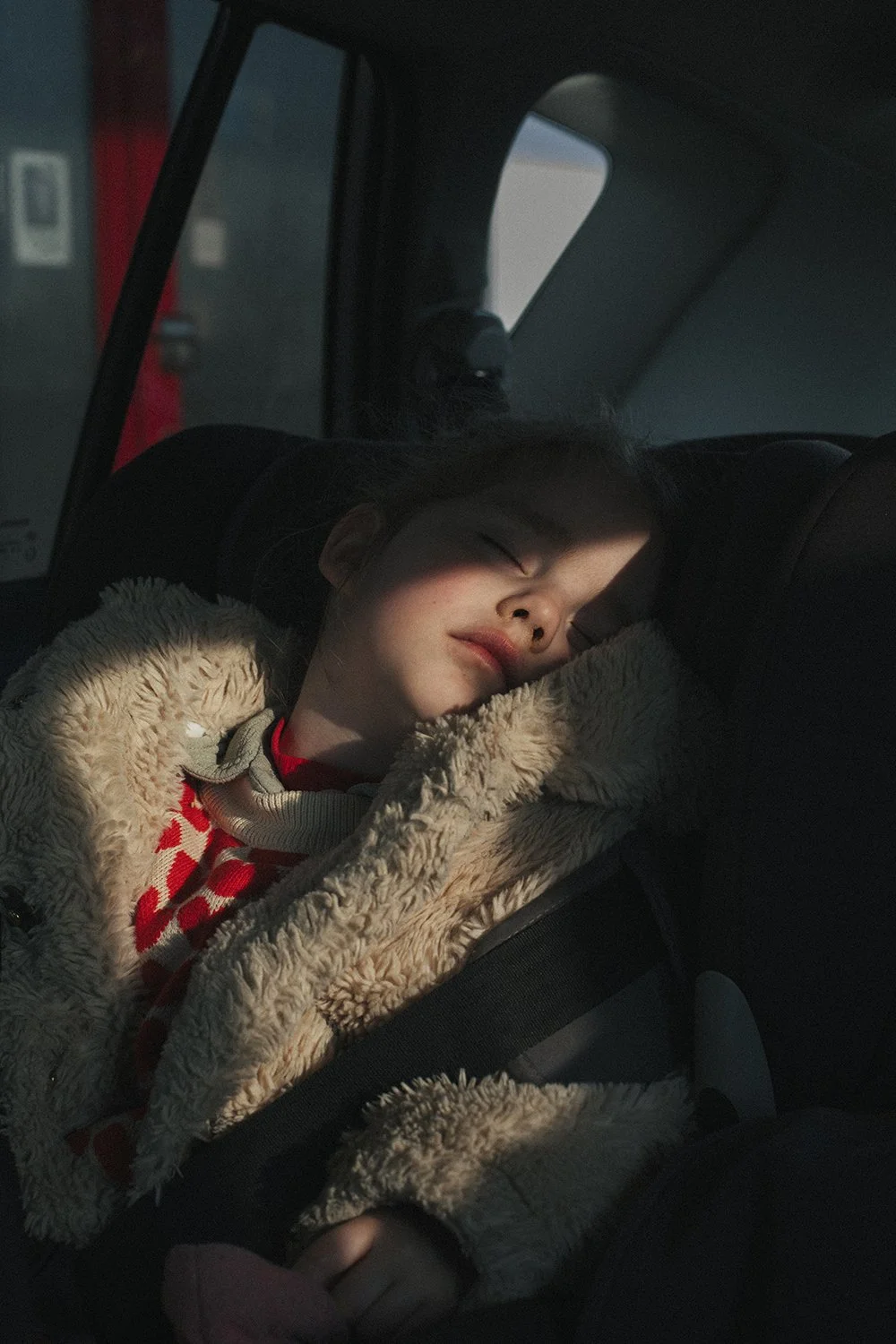
JS: I believe photography is inherently melancholic, yet simultaneously nostalgic. It is essentially nostalgic because, once a picture is taken, you possess a visual reminder that prompts you to revisit the moment when the photo was captured.
HM: That’s true. But when you say it’s inherently so, then it would almost follow that whenever the medium is used, nostalgia is going to be in play. I don’t know whether that’s true.
JS: Well, I agree that my statement isn’t entirely accurate in the sense that I’m specifically referring to a certain type of photography. There are various genres, and perhaps this sentiment doesn’t apply to all of them. I’m currently excluding abstract photography and experiments with lights in the darkroom and film from this discussion. However, when I teach photography to students, I often observe a pattern where first-year students, when tasked with a project, frequently choose topics related to memory. It may sound cliché, but clichés often exist for a reason. I find it interesting that the medium naturally lends itself to projects centered around memory. So, when I mention it being inherently nostalgic, I mean it in that sense; it’s a medium that naturally lends itself with those types of projects and ways of thinking.
HM: Yes. I think you’re right.
-
HM: You mentioned that other photographers are also dealing with this theme or keep returning to it. And I was wondering, do you have any photographers that immediately come to mind or that for you are benchmarks or models of melancholy and photography?
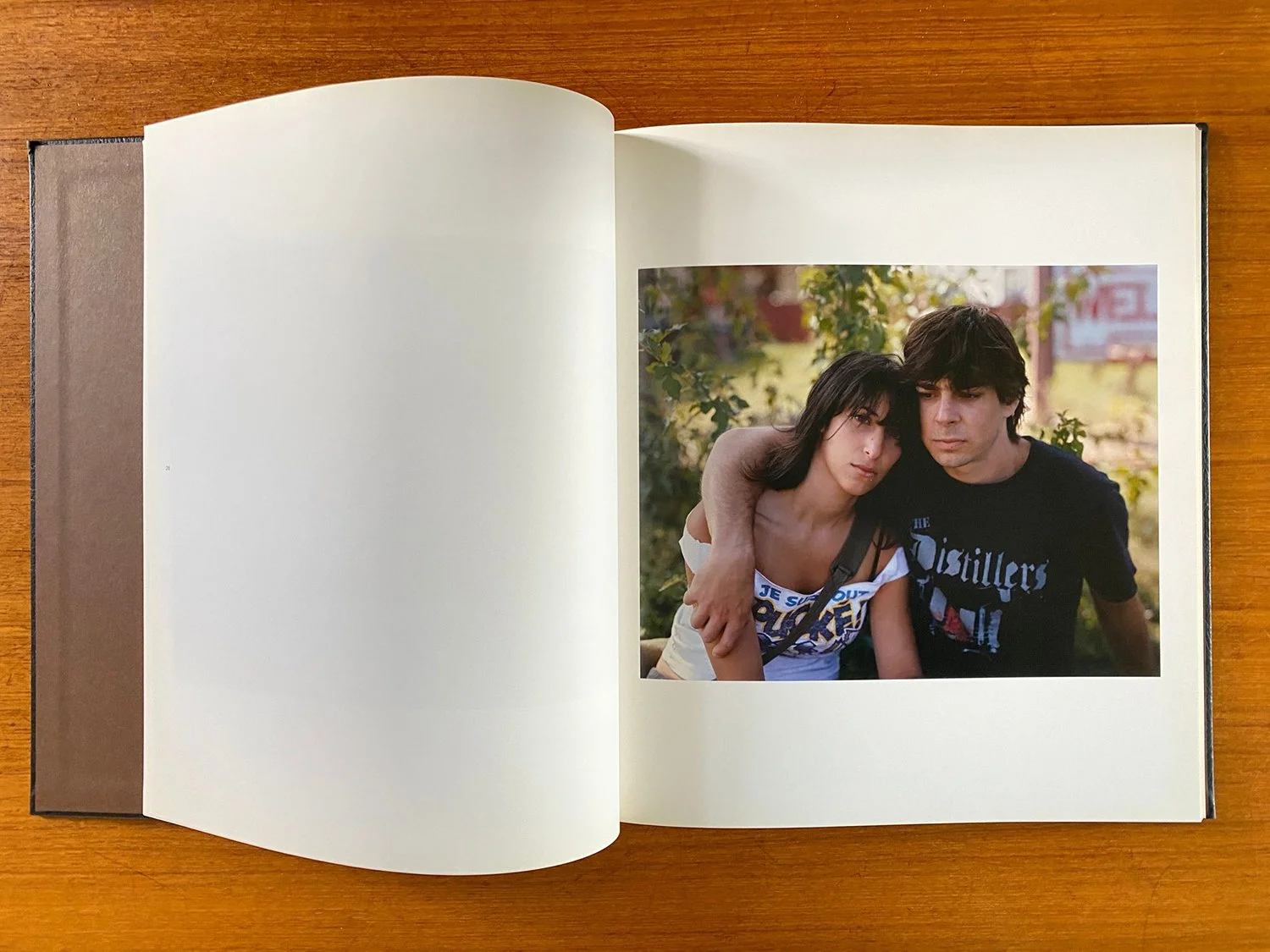
JS: The first photographer that comes to mind is the well-known Magnum photographer, Alec Soth. His work exudes profound melancholy. If you watch him speak on YouTube, he delves into explanations about his work and other photography, revealing his own melancholic disposition.
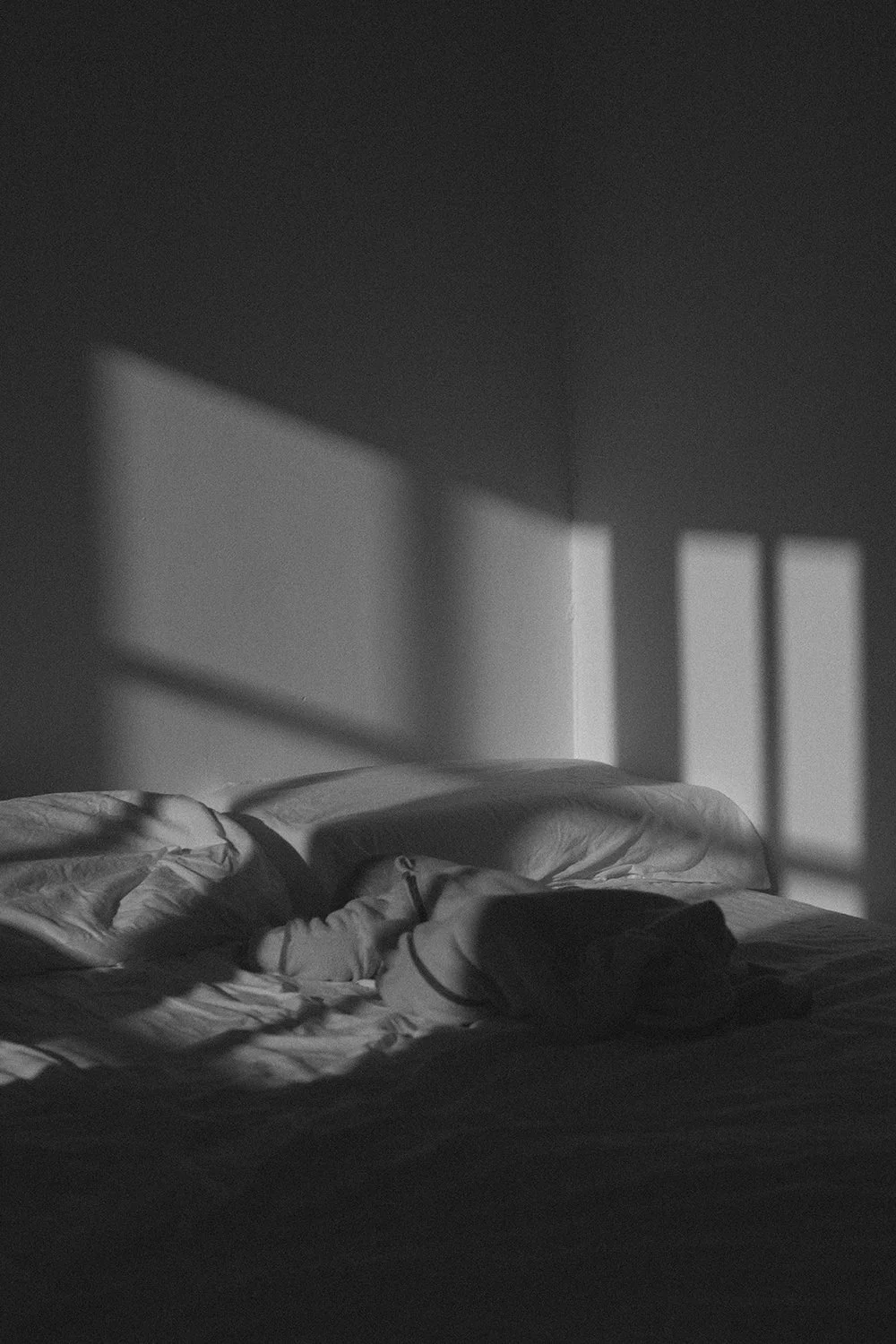
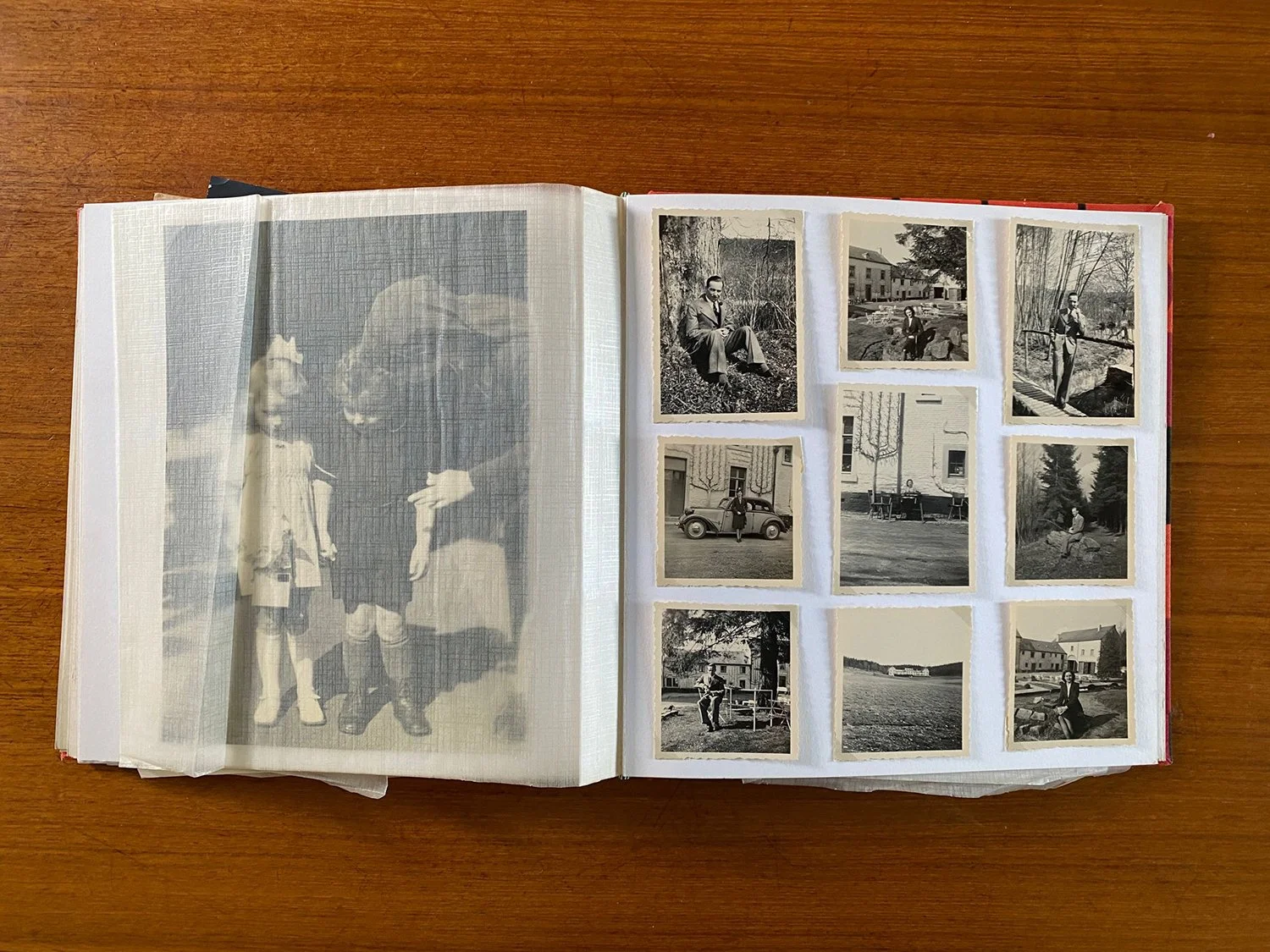
Of course, there is a whole list of other photographers who evoke similar emotions. The medium itself carries a profound sense of melancholy, often intertwined with the theme of memory. My current focus centers on my interest in family photography. I find myself frequently capturing moments of my own children, attempting to preserve glimpses of their fleeting childhood, as time moves swiftly. The very act of doing so feels melancholic. In addition to photographing my own family, I also collect images of studio backdrops featuring individuals who are no longer present. It follows the same concept—people used to visit studios to have their portraits taken, intending to offer cherished memories to their loved ones. However, when I discover these pictures at flea markets, they are often discarded, with no one recognizing the individuals in the photographs. These pictures were initially taken to keep memories alive, yet when the last person who knew the subject passes away, their memory fades away too, unless they happen to be a widely known figure.
HM: Yes, I think that’s a very nice summary of the melancholic potential of photography. And I really like the fact that you’re actually pointing to two stages in which melancholy very much seems to be part of what photography is about. The first stage is that you realize that time is fleeting. That’s a harsh existential truth. As a result of that, you want to hold onto something that is dear to you. But then there’s the second stage where you’ve made the picture, you’ve tried to hold on to this fleeting moment, but then you realize that this moment and the depicted person will be eventually forgotten. And so there’s another bit of melancholy there where you realize that the very attempt to hold onto to something of the past, is ultimately futile in photography.
JS: I’m currently working on a project that aligns perfectly with these sentiments. The loss of my mother to suicide when I was 15 has left a lasting impact. Last summer, while going through pictures with my four year old daughter Luna, she pointed to images saying, “Oh, that’s Opa and Oma.” saying they are my parents. So I had to explain to her that while they are her grandparents, her grandmother is actually not my mother. She then asked about my mother, and I had to navigate the delicate task of explaining her absence.
With this poignant moment in mind, I found myself contemplating how to guide my children through this absence? How do I convey who my mother was—highlighting both her virtues and flaws—when they’ve never met her? These questions led me to embark on a project: creating a book about my mother. I’m currently gathering memories from various sources, including my brother, my mother’s sister, her friends, and even childhood friends who knew her.
However, the challenge arises in photographing someone who is no longer alive. To address this, I plan to enlist other mothers to stand in for those pictures. My own children will also play a role; I’ll involve them in activities like painting their nails with my mother’s nail polish and capture those moments. So that’s a profoundly melancholic project in the making; revolving around the essence of memory, how it changes, how we desperately try to preserve it, and how to convey it.
-
HM: [..] A photograph, let’s say, can express a certain emotion. It can also elicit that same emotion, which is different. So if we’re talking about melancholy, melancholy can be the emotion that the artist has and then tries to express via the photograph. But also, melancholy can be the emotion that is elicited in the viewer, even though it was not on the mind of the photographer. And then thirdly, a photograph can be expressive of melancholy when it gives the viewer an idea of what it’s like to experience melancholy.
The reason why I wanted to come back to that is because it ties in with artistic value and artistic achievement. When we talk about nostalgia and melancholy, I think a lot of photographs elicit those emotions irrespective of whether they were intended as such and irrespective of any skill.
A nice example is old family albums one may find on a flea market. I know Julie goes to a lot of these secondhand markets and often picks up such old photo albums. No one may remember who the people in the photographs are. Many of these photographs are not skillfully made and they were never made with the intention to elicit melancholy or nostalgia, but they do.
And I think that’s one thing: to think about photography as the medium that elicits these emotions, even if that was never the intention of the maker of the photographs. But it’s quite another thing to have a photographer like Julie, who wants to express that emotion and then manages to create work that brings that emotion about in the viewer in a way that is illuminating. So that’s why I’ve been interested in Julie’s work; her work is truly expressive of melancholy, it doesn’t merely elicit emotion.
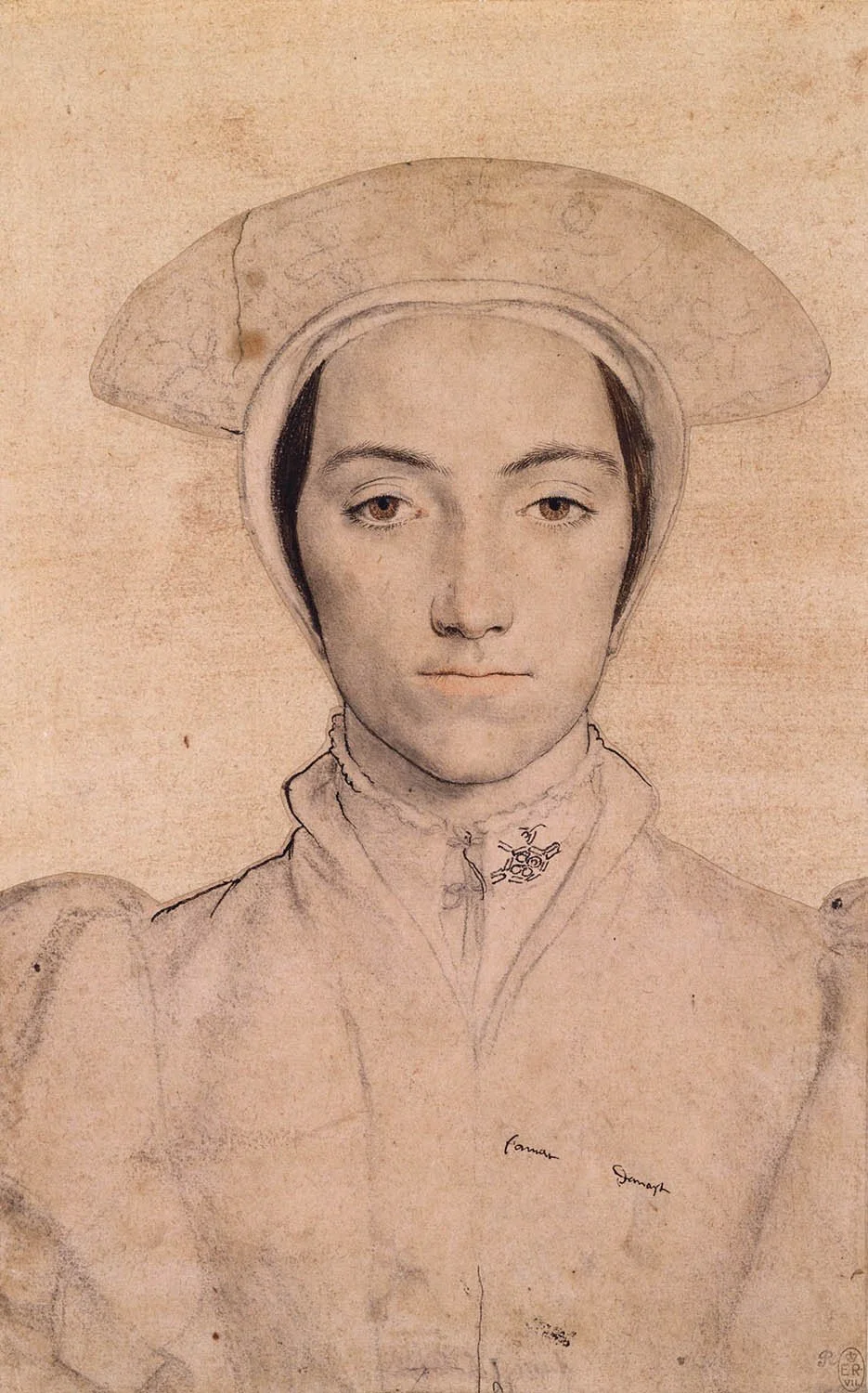
Hans Holbein the Younger, Woman Wearing a White Headdress, c. 1532–43, Royal Collection Trust. © Her Majesty Queen Elizabeth II 2018.
-
JS: Μelancholy is such a loaded word and I was wondering what were the other words you were thinking about when you started?
HM: In the beginning I was just interested in certain moments of bittersweet profundity that had moved me deeply in my engagement with art works. But I didn’t have a label for that experience yet. It wasn’t even clear to me whether it was one experience that I was thinking about; because alongside 16th century renaissance portraits, where you have the feeling that the person in the portrait is looking back at you, I was also moved by certain novels and particular films or songs. And it wasn’t entirely clear to me whether it was always the same thing.
When I started thinking about it, philosophically, the terms that initially came to me were “melancholy” and also “nostalgia”. But I quickly realized that it wasn’t nostalgia I was after, since many of the experiences I had in mind weren’t backward looking. Then there’s the term ‘being moved’. When we use it in everyday situations, we may think of it as some vague, indeterminate feeling. You are touched by something, but you cannot specify the precise emotions you are feeling. But I read some recent philosophical work on what it is to be moved, and am now persuaded that it is a quite specific emotion, with a very distinct profile, just like jealousy or just like nostalgia. And I think many of the experiences that I’ve been interested in are examples of being moved. But when I started honing in on the particular experience that was most central to my own engagement with art, and I asked myself what it is that I find valuable in the works that truly struck a chord with me, I found that melancholy was the most suitable term. Having said that, you are right, it’s a term with a lot of historical and theoretical baggage. So I’ve been thinking that perhaps I should focus on the notion of ‘bittersweet’ in my future work. That makes things simpler.
JS: I’m currently working on a project that aligns perfectly with these sentiments. The loss of my mother to suicide when I was 15 has left a lasting impact. Last summer, while going through pictures with my four year old daughter Luna, she pointed to images saying, “Oh, that’s Opa and Oma.” saying they are my parents. So I had to explain to her that while they are her grandparents, her grandmother is actually not my mother. She then asked about my mother, and I had to navigate the delicate task of explaining her absence.
With this poignant moment in mind, I found myself contemplating how to guide my children through this absence? How do I convey who my mother was—highlighting both her virtues and flaws—when they’ve never met her? These questions led me to embark on a project: creating a book about my mother. I’m currently gathering memories from various sources, including my brother, my mother’s sister, her friends, and even childhood friends who knew her.
However, the challenge arises in photographing someone who is no longer alive. To address this, I plan to enlist other mothers to stand in for those pictures. My own children will also play a role; I’ll involve them in activities like painting their nails with my mother’s nail polish and capture those moments. So that’s a profoundly melancholic project in the making; revolving around the essence of memory, how it changes, how we desperately try to preserve it, and how to convey it.
-
PHOTOGRAPHER
Julie Scheurweghs lives and works in Brussels where she obtained a Masters degree in LUCA school of arts in 2010. After her first Solo Exhibition called “Accidentally on purpose” in Amsterdam in 2012 she quickly made her Belgian solo debut in Knokke and has had numerous solo and group shows since. Apart from being a photographer, Julie Scheurweghs is also an avid collector of photographs, both old and new, that have been discarded or even labeled trash. In her work, Scheurweghs uses these decaying images, disconnected from their original owners, as a medium to provide an intimate look into the personal lives of strangers and as a powerful metaphor for the ephemerality of human life.
juliescheurweghs.com -
PROFESSOR / PHILOSOPHER
Hans Maes is Senior Lecturer and Co-Director of the Aesthetics Research Centre at the University of Kent, United Kingdom. He is the editor of Portraits and Philosophy (Routledge, 2020) and author of ‘What is a Portrait? (British Journal of Aesthetics 2015). Other publications include: Conversations on Art and Aesthetics (Oxford University Press, 2017), Pornographic Art and The Aesthetics of Pornography (Palgrave MacMillan, 2013), and Art and Pornography (Oxford University Press, 2012). He is Vice-President of the British Society of Aesthetics and Past President of the Dutch Association of Aesthetics.